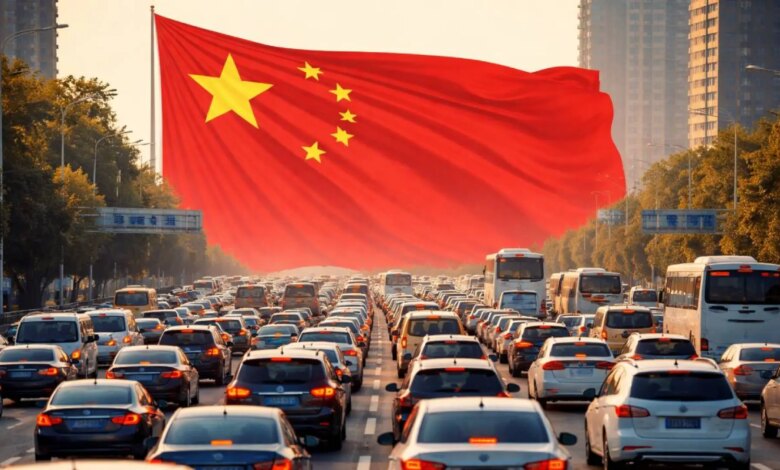
In recent years, Chinese cars have virtually taken over global markets, including Spain. Their models are appearing on the streets more and more often, and new brands are emerging with remarkable regularity. However, behind this rapid growth lies a troubling reality: in the near future, dozens of Chinese car manufacturers may cease to exist. The reason is a sharp reduction in government support and a cooling demand for electric vehicles.
In 2026, the industry will face its most serious challenge of the past decade. Whereas previously, government subsidies and tax incentives allowed companies to ramp up production and exports, these forms of support are now becoming a thing of the past. As a result, according to experts, more than 50 Chinese brands will find themselves on the verge of bankruptcy. For many, it will not just be about thriving, but about basic survival in the market.
Turning point
In recent years, electric vehicles from China have shown impressive growth rates. Just last November, exports surged by almost 90% compared to the previous year. This success was driven not only by domestic demand but also by generous support measures from the government. However, in 2026, the situation will change dramatically: car sales are expected to fall by 5%—the most significant decline since the pandemic.
The main reasons are declining buyer interest and the cancellation of key subsidies. Until now, buyers could count on incentives worth more than €2,400, as well as exemption from a 10% tax when purchasing an electric vehicle. Now these incentives are disappearing, leaving many companies extremely vulnerable.
Crisis of trust
There is a sense of nervousness in the industry. Plant managers and investors openly admit that the era of easy money and quick wins is over. Now only the strongest survive—those who have established efficient production and offer truly competitive models. The rest risk not making it to the end of the year.
Smaller and mid-sized companies that have yet to turn a profit are struggling the most. For them, 2026 will be a real test of resilience. If demand keeps falling and the government doesn’t restore its support, a wave of bankruptcies could sweep across the entire sector.
Race for survival
Only major players like BYD and Leapmotor remain in the winning position. These companies have long reached the international stage, attracted strategic investors, and adapted to the new conditions. For example, Leapmotor has set an ambitious goal of selling one million vehicles a year. For most competitors, those volumes remain an unattainable dream.
Meanwhile, dozens of lesser-known brands are being forced to cut production, lay off staff, and seek new sources of funding. Some are trying to merge with larger companies, while others are urgently reworking their business models. But there’s little time left to decide: the market is getting tougher, and competition is ruthless.
Spanish connection
Spain, like other European countries, has become one of the key destinations for Chinese automaker expansion. Dozens of brands already operate here, and many had planned to increase their presence. However, new economic realities could force serious adjustments to these plans. If some companies exit the market, it will affect not only the range of options but also pricing in the electric vehicle segment.
Buyers accustomed to affordable Chinese models may face rising prices and fewer choices. Dealers and service centers will also face challenges, needing to adapt their business processes and find new partners. Still, there’s a window of opportunity for European manufacturers—they can win back some lost ground.
The future is uncertain
The situation in China’s electric vehicle market is a litmus test for the entire global automotive industry. If the largest producer and exporter is facing such challenges, it means changes will affect everyone. Analysts are already warning: the era of cheap, mass-produced Chinese EVs is ending. It’s being replaced by fierce competition, innovation, and a fight for survival.
In the coming months, we’ll see a major transformation in the industry. Some will adapt and reach a new level, while others will disappear forever. One thing is clear: the car market will never be the same, and everyone—from manufacturers to ordinary car owners—should be ready for it.
For reference, BYD (Build Your Dreams) is one of China’s largest electric vehicle manufacturers, founded in 1995. The company is known not just for passenger cars but also for developing batteries and electric buses. Leapmotor is another prominent market player, specializing in innovative technologies and backed by significant investment from state holding FAW. Both brands are actively expanding exports and have already established strong positions in Europe, including Spain.