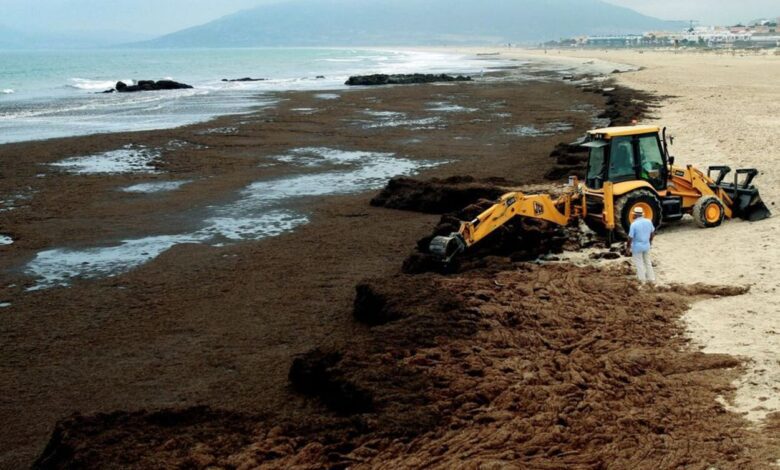
On the coast of Cádiz, scientists and engineers have unveiled an unexpected solution to the invasion of Rugulopteryx okamurae seaweed. This Asian algae has virtually overtaken local beaches in recent years, harming both fishermen and the tourism industry. Now, experts are convinced: this harmful biomass can become a valuable resource for energy production and organic fertilizers.
Research that began back in 2019 showed that the seaweed displaces native species and destroys marine ecosystems. Every year, thousands of tons of this biomass accumulate on the beaches of Cádiz, and its disposal costs municipalities millions of euros. However, recent experiments have revealed new opportunities to use the algae within a circular economy framework.
Compost experiments
Scientists from Sevilla and Extremadura proposed processing the algae with the help of insects and crustaceans. In laboratories, they tested how quickly and effectively species like the black soldier fly (Hermetia illucens) and tropical cockroaches of the Eublaberus genus could break down the biomass. It turned out that these organisms not only decompose the algae, but also reduce its toxicity, turning waste into fertilizer with acceptable salt levels.
Special attention was given to Eublaberus cockroaches, which demonstrated high efficiency when processing large volumes of algae. This approach could be implemented on an industrial scale, reducing disposal costs while also providing cheap organic compost for agriculture.
Biogas and new technologies
In parallel with composting, scientists explored the potential of producing biogas from algae. They used mechanical and thermal pretreatment methods, which significantly increased methane yield during anaerobic digestion. As a result, they obtained not only biogas but also biofertilizers suitable for use in fields.
Terrestrial isopods, such as Porcellio laevis, also took part in the experiment. These crustaceans quickly consume algae, reproduce easily, and can accumulate heavy metals, which may be useful for cleaning contaminated areas. However, large-scale application will require further research and process optimization.
Potential for industry
The research showed that algae processing can benefit not only agriculture but also other sectors. During the study, bioactive compounds were identified that could be used in the food, pharmaceutical, and cosmetic industries. This opens up new prospects for local economic development and job creation.
An important outcome was that scientists proposed an integrated approach: combining composting, biogas production, and extraction of valuable substances. This approach minimizes environmental damage while providing economic benefits from a previously dangerous invasive species.
Regional impact
The introduction of new technologies could significantly change the situation on the coast of Cádiz. Municipalities that previously spent vast sums on algae removal can now consider it a source of revenue. Additionally, the development of such projects helps strengthen the region’s position in green technologies and sustainable development.
Representatives of local authorities, environmental organizations, and fishing communities participated in the discussion of the results. All stressed the importance of finding solutions that would not only protect nature but also support the economies of coastal towns.
If you didn’t know, Red Eléctrica is the largest power grid operator in Spain, actively investing in environmental and innovative projects. Universidad de Sevilla is one of the country’s leading research centers, renowned for its studies in biology and ecology. Joint initiatives by these organizations have often served as examples of successful collaboration between science and business in addressing urgent regional challenges.