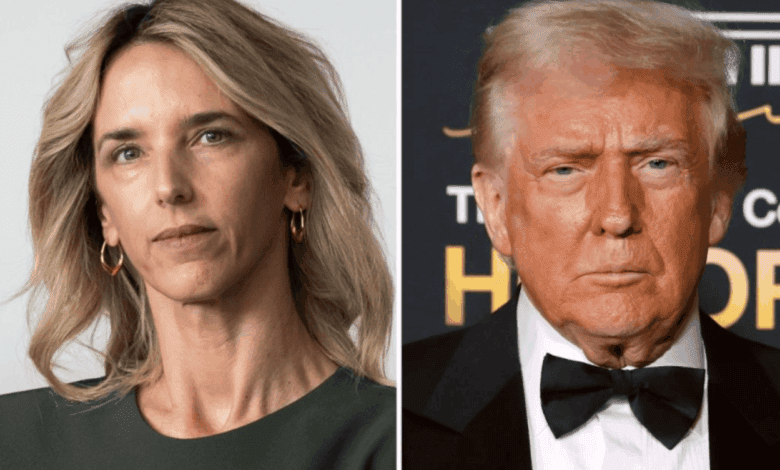
A heated debate has erupted in Spanish politics after Partido Popular MP Cayetana Álvarez de Toledo sharply criticized former US President Donald Trump. The controversy stemmed from Trump’s recent speech on the situation in Venezuela and the role of María Corina Machado, whom he unexpectedly excluded from the list of potential national leaders. Álvarez de Toledo did not stay silent and openly accused the American politician of spreading misinformation, stressing that Machado has the unequivocal support of the Venezuelan people.
The Spanish MP’s comments sparked a strong reaction not only among her supporters but also her opponents. Social media platforms saw the debate flare up again: thousands of comments, tens of thousands of likes, and countless shares. Known for her bluntness, Álvarez de Toledo didn’t mince words when it came to the fate of Venezuela and its opposition. She maintains that Machado is a figure who cannot be ignored, regardless of statements coming from Washington.
A Spanish Perspective
For Spanish society, the issue of Venezuela has long ceased to be distant. Many families in Spain have relatives in Latin America, and political developments in Caracas are often discussed alongside domestic news. That’s why Álvarez de Toledo’s reaction did not go unnoticed. Her position resonated with those who believe that Europe and the US should encourage democratic change in Venezuela, rather than impose their own solutions.
However, not everyone in Spain shares the deputy’s enthusiasm. Some commentators highlight the complexity of the situation and urge caution when making judgments. But even skeptics admit that such statements influence public opinion and could shift the balance of power in international relations.
Trump’s comments
Speaking from his Mar-a-Lago residence, Donald Trump emphasized that the US would keep a close watch on the situation in Venezuela until a suitable successor to Maduro emerges. He also noted that, in his view, María Corina Machado does not command enough respect among her compatriots to lead the country. This statement puzzled many observers of the Venezuelan opposition.
In response, Álvarez de Toledo reminded that Machado is a recognized opposition leader whose popular support is beyond question. She also mentioned US Senator Marco Rubio, whom she described as being well informed about the real situation in Venezuela.
The Voice of Machado
María Corina Machado, in turn, addressed her fellow citizens, declaring that the moment of freedom has come for Venezuela. She emphasized that after Maduro withdrew from negotiations, the United States kept its promises and supported the rule of law. Machado called on all citizens to prepare for change and to support the elected president, Edmundo González Urrutia, who, in her view, should immediately take office.
In her statement, Machado noted that the transition period requires the participation of every Venezuelan, whether they are in the country or abroad. She promised that the opposition will soon announce their next steps through official channels.
Spanish context
In Spain, the issue of Venezuela has always sparked lively interest. Every step taken by the opposition and reactions from world leaders are closely followed here. Statements by Álvarez de Toledo have sparked new debates about Spain’s role in supporting democratic processes in Latin America. Some politicians have already called for a more active stance by Madrid on the international stage.
At the same time, Spanish society is divided in its opinions. Some believe that supporting Machado is a step toward freedom for Venezuela, while others fear foreign interference and call for dialogue among all sides of the conflict. However, there are hardly any who remain indifferent to what is happening.
Reaction and consequences
The public exchange between Álvarez de Toledo and Trump has become a vivid example of how international events can impact Spain’s domestic politics. The question of who should lead Venezuela has unexpectedly come to the forefront of Spanish media and political debate. The discussion continues, and so far no one dares to predict where this dispute will lead.
One thing is clear: Spanish politicians have no intention of staying on the sidelines when it comes to events in Latin America. Their voices are increasingly heard on the international stage, and their stances are becoming more defined. The only question is whether they will be heard in Caracas and Washington.