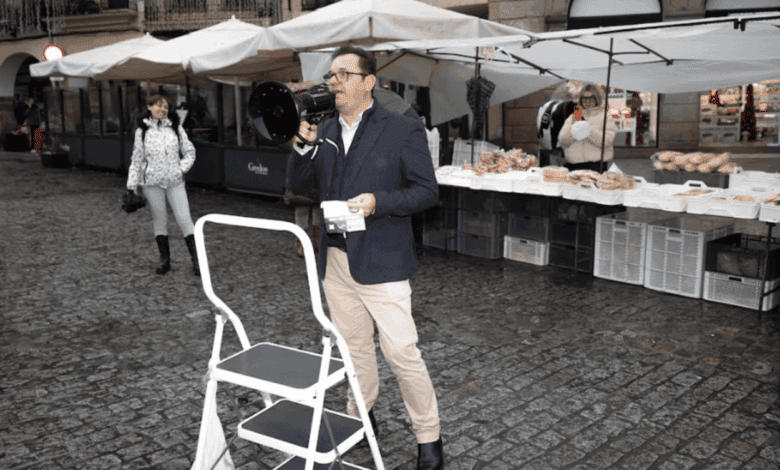
In the center of Plasencia, amid the morning bustle, Raúl González appears—a man with dark glasses, a megaphone, and a white ladder. His voice was meant to carry across the square, but the equipment failed: the batteries died at the worst possible moment. Unfazed, the candidate went to buy new ones and soon was back in the thick of things, ready to address passersby. His goal is to share the ideas of a new regionalist coalition, participating in Extremadura’s elections for the first time.
Рауль не похож на типичного политика. Он не боится импровизировать, даже если для этого приходится устраивать мини-митинг прямо у овощного рынка, где по вторникам собираются местные жители. Его не смущает ни моросящий дождь, ни отсутствие разрешения на публичное выступление. Полиция проезжает мимо, не обращая внимания на происходящее. Люди останавливаются, слушают, кто-то улыбается, кто-то просто наблюдает издалека. Одна пожилая женщина с зонтом в горошек просит: «Пусть улицы починят!» — и Рауль тут же предлагает ей браслет с символикой Эстремадуры.
Campaign finale
The election race in the region is coming to an end. Forecasts predict a win for the Partido Popular (PP), but the question of a majority remains undecided. In María Guardiola’s campaign headquarters, cautious optimism reigns: internal polls forecast 32 seats, which would almost guarantee control of parliament. Yet, other studies suggest the party may secure slightly fewer—30 seats—and in that case, the outcome would depend on coalition agreements.
Against this backdrop, the coalition Juntos, Levanta y Cáceres Viva, formed in 2021, is emerging as the only alternative capable of causing an upset. Last year, the alliance gathered over 15,000 votes, secured 115 seats in municipal governments, and won 15 mayoral posts in various cities across Cáceres and Badajoz. Their slogan is “Extremadura: More and Better.” They have just 7,000 euros for the entire campaign, yet they have already distributed 100,000 flyers and 70 meters of fabric in the regional colors, which they use to make bracelets for supporters.
People and ideas
Raúl travels around Extremadura in a blue Toyota Corolla adorned with posters of his portrait and regional flags. His right-hand man is José Luis Fernández, a former deputy who believes that the main problem with local regionalism is the dominance of the two major parties. According to him, their coalition brings together people from different walks of life—not professional politicians, but those who know what real work is.
González and Fernández are convinced that the socialists are heading into the election in their weakest position in years. The PSOE candidate, Miguel Ángel Gallardo, doesn’t even have the support of his own voters. Polls show his approval ratings are the lowest among all the contenders. Raúl believes their coalition can offer a “useful vote” to disappointed socialists—not to the supporters of radical parties. He emphasizes that the region has no issues with migrants: “They harvest tobacco, olives, and cherries. We couldn’t manage without them.”
Chances of success
The coalition is aiming to secure 10,500 votes in Cáceres and almost 17,000 in Badajoz to get their deputies elected. Last year, they fell just 1.2% short of the required result. Raúl, a pharmaceutical sales representative by profession, took time off for the first time to join the election campaign. He believes Extremadura’s main issue is underdeveloped infrastructure. “How is it possible that it’s faster to get from Tenerife to Madrid than from Badajoz?” he wonders.
In Plasencia, Raúl hands out flyers, talks to anyone willing to listen, and openly admits he used to vote for different candidates—from Juan Carlos Rodríguez Ibarra to Ciudadanos and Extremadura Unida. “While some are demanding more Netflix shows be translated, we just want poverty to end,” he says. Though few people know him, Raúl is sure that the real public mood differs from the results of the polls.
Election day
In the midst of the campaign, Raúl’s phone rings more often. He seizes every opportunity to speak with potential voters. Even if a call seems suspicious, he hands the phone to his assistant—just in case it’s someone who’s undecided. On this day, there’s a sense of change in the streets of Plasencia, though no one yet knows whether the campaign will deliver the long-awaited result for the new coalition.