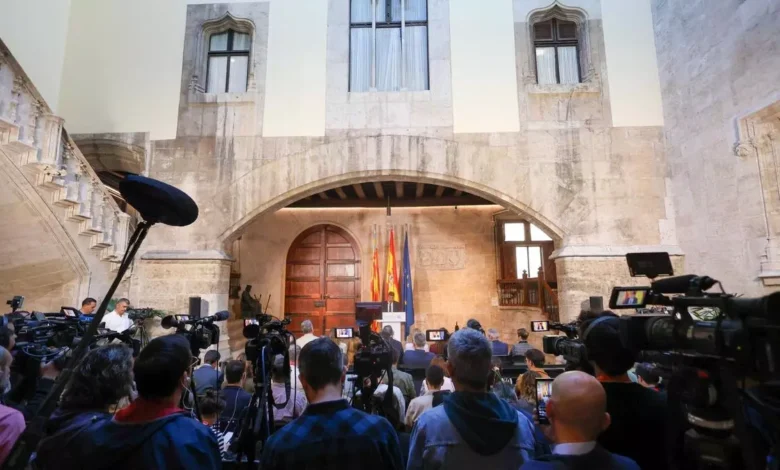
One of the most turbulent political chapters of recent years in Valencia has come to an end: Carlos Mazón has announced his resignation as president of the autonomous community. His decision follows a year marked by public discontent, political conflicts, and legal proceedings triggered by the fallout of a devastating natural disaster that claimed the lives of 229 people.
Speaking before the government, Mazón admitted he could not handle the pressure and acknowledged mistakes that became the focus of fierce criticism. Public attention was especially drawn to his delayed response on the day of the tragedy, when he was at a lengthy lunch while the region was facing catastrophe. This incident became a symbol of public dissatisfaction and distrust of the authorities.
After Mazón’s departure, he will temporarily continue to serve as the region’s acting leader, but his political future remains uncertain. In the coming weeks, parliament will initiate the process of nominating and confirming a new president. With the ruling party lacking an absolute majority, the Vox party will now play a decisive role in forming a new government and supporting the interim leader until the region’s reconstruction is complete.
Political intrigue and pressure within the party
Intraparty divisions and pressure from the central leadership intensified after the anniversary of the tragedy, when at the victims’ funeral it became clear that Mazón had become the main target of the relatives’ anger. Within the party, calls for his resignation grew louder, and Vox’s support, which had earlier allowed the 2025 budget to pass, only postponed the inevitable.
The loss of trust was further deepened by legal proceedings: the investigation into Mazón’s actions during the crucial hours of the disaster cast doubt on his explanations. Discrepancies in the timeline, a lack of transparency, and conflicting testimonies only fueled the crisis of confidence. As a result, the party decided not to repeat past mistakes and leave its leader alone, as had happened with other politicians in similar situations.
What awaits Valencia after the resignation
The region now stands on the brink of change. In the coming days, candidates for the head of the autonomous community will be nominated, and it is already clear that, without Vox’s support, no party will be able to form a stable government. Both current politicians and new faces capable of negotiating with allies are being named among the possible successors.
A year after the tragedy has been a time of trials and reassessment for Valencia. Mazón’s departure marks a new chapter in the region’s history, bringing issues of trust, accountability, and the need for change to the forefront. Ahead lies a difficult period of finding balance between party interests and public expectations.