A delegation from the government of Castilla y León traveled to Germany to strengthen economic ties and attract new investment. Following meetings with representatives from leading German companies, the possibility of investing 350 million euros in regional projects is under discussion, which could create 1,100 new jobs in the coming months. The talks included companies such as Wacker (biotechnology), Rheinmetall (defense), Quantum (industry), and Kiecker.
According to the region’s Minister of Economy and Finance, Carlos Fernández Carriedo, German investors expressed genuine interest in collaborating on new initiatives. Although specific projects have not yet been disclosed, the plans are said to be long-term and focused on innovation in auto components, biotechnology, as well as security and defense sectors.
Export growth
Over the past five years, exports from Castilla y León to Germany have increased by 60%, reaching 1.2 billion euros. The automotive sector has seen an especially notable surge—up 70%. Tire sales alone have nearly tripled, driven by the operations of Michelin’s plants in Valladolid and Aranda, as well as Bridgestone’s plant in Burgos. These factories manufacture not only standard tires, but also specialized products for large machinery and aviation.
Exports of cars and trucks have also shown impressive growth: from 5 million euros in 2020 to 153 million in 2024. The main demand is for hybrid models. In addition, the region is actively increasing shipments of agricultural products, although no new investments in this sector are planned for now.
Leading sectors
Biotechnology and the automotive industry remain key areas for German partners. In these fields, Castilla y León is demonstrating steady growth and keen interest in new technologies. The region is already implementing dozens of projects related to green energy and innovative manufacturing, making it attractive to foreign investors.
Other export goods include coffee products, alcoholic beverages, cookies, and canned vegetables. In recent years, sales of these goods to Germany have also increased significantly. However, there has been a decline in wine exports, which is attributed to changes in the global market.
Business contacts
During the visit, representatives from Castilla y León held meetings with the leadership of the Bavarian Association of Entrepreneurs, as well as with representatives of the region’s ministries of economy and international relations. They discussed legislative changes, investment programs, and prospects for cooperation between the two industrially developed regions.
Particular attention was given to sharing experiences in export support and opening new markets. During the negotiations, opportunities for joint projects were discussed, as well as conditions for attracting German capital to the economy of Castilla y León.
Industrial Prospects
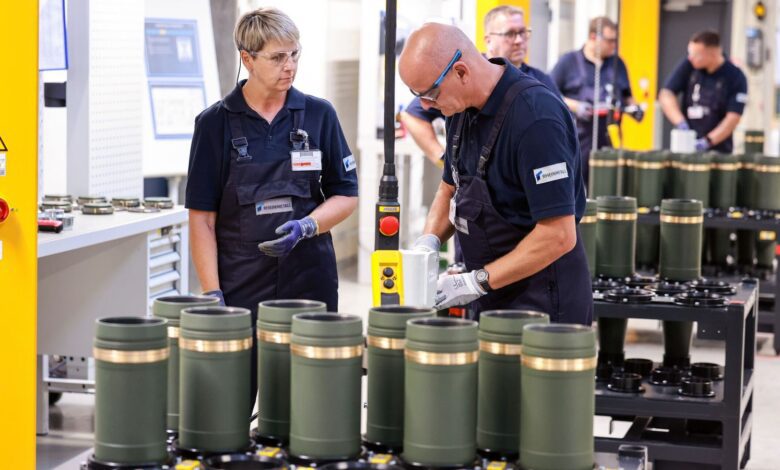
At the end of the visit, the delegation met with representatives of Quantum Capital and toured Wacker’s production facilities. The following day, negotiations were held with Rheinmetall and Kiecker, both of which also expressed interest in investing. All these companies see Castilla y León as a promising location for business development and the implementation of new technologies.
The region continues its active efforts to attract foreign investment, focusing on innovation, industrial production, and exports. Authorities are confident that new projects will not only create jobs but also strengthen Castilla y León’s position in the European market.