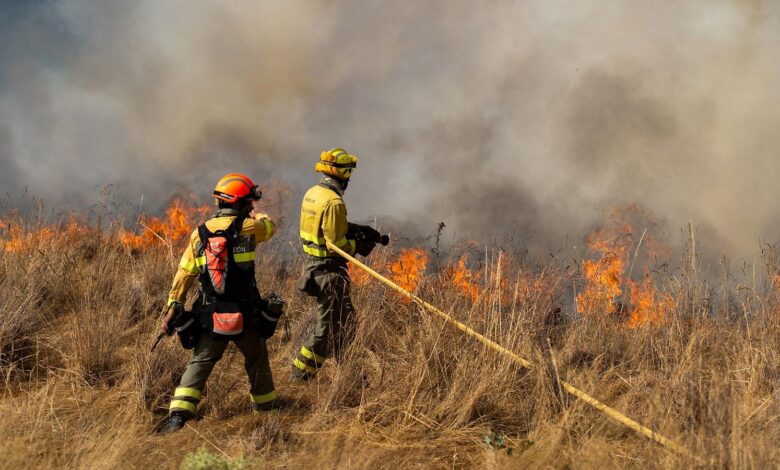
A scandal is unfolding in Castilla y León over the work of the fire services. Emergency service workers in the region are actively discussing, via messengers, the problems they faced this summer: lack of resources, ineffective management, and insufficient training. Amid abnormal heat and high fire risk, these shortcomings became especially apparent.
Firefighters note that although they were prepared for a challenging situation, their concerns were confirmed: as soon as major fires broke out, the system failed. Many crews were left without clear instructions, even as fires raged around them. Some teams stayed idle at their bases, waiting for orders, while the flames spread to new areas.
Within the professional community, dissatisfaction with management decisions is growing. Firefighters report that equipment sat unused, and backup vehicles were not deployed even in critical areas such as Sahechores in the province of León. Drivers complained about the lack of clear instructions, and some teams had to make independent decisions and head out to fight fires without official orders.
As a result of the confusion, so-called ‘pirate’ squads appeared—groups of firefighters who, during their off-duty hours, independently joined efforts to combat the fires. This became a response to the lack of coordination and the shortage of personnel on the ground.
A particular concern is the level of training among certain personnel. Firefighters report that in several cases, individuals without the necessary experience or training were brought in to work. There were incidents where heavy equipment drivers underwent accelerated courses lasting only a few minutes before being sent to the frontline. Shift supervisors and managers did not always possess the knowledge required to make decisions in emergency situations.
In some areas, such as Porto de Sanabria in Zamora province, firefighters waited for orders from early morning but never received clear instructions. As a result, coordination broke down and the fight against the fire was prolonged.
Firefighters also point out that suggestions for improving operations are often ignored. Some staff proposed changes to the schedule to better prepare for long shifts, but their initiatives were not supported. As a result, when the situation escalated, it became clear that both resources and personnel were insufficient.
The issue of leadership qualifications is also being discussed within professional circles. According to firefighters, individuals without sufficient experience are sometimes appointed to key positions, leading to mistakes in management. In one case, when a responsible specialist was absent, a civilian with experience in fire response had to step in and take charge.
The situation worsened after the tragedy in León, where one of the staff members lost his life. Colleagues believe this was caused by excessive workloads and insufficient training. In their view, regional authorities do not pay enough attention to firefighter training and equipment, nor do they provide the necessary support in critical situations.
In light of these events, pressure on the authorities in the region is mounting. Firefighters are demanding a review of the training system, increased funding, and better working conditions. They stress that without real changes, the situation could repeat itself in the future and the risks to people and nature will only grow.
The problems identified this summer have sparked a broad discussion about the state of the fire service in Castilla y León. Firefighters insist on the need for reforms and expect the leadership to take concrete steps to improve the system.