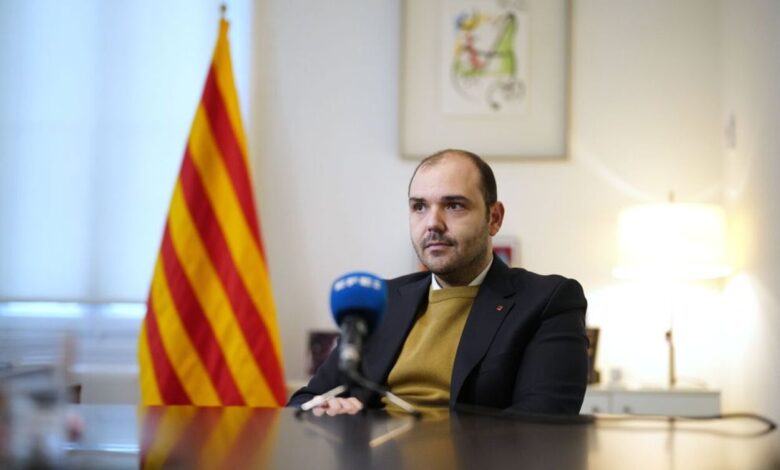
A new phase of political debate is unfolding in Catalonia. Albert Dalmau, the Councilor for the Presidency in the autonomous government’s cabinet, has called on Junts to reconsider its stance and open a dialogue with the Socialists. He believes that cooperation between political forces, not constant attempts to block opponents’ initiatives, is what can ensure the region’s stability and progress.
Dalmau emphasized that effective governance is impossible without input from the opposition. He noted that for Catalonia to move forward, progress requires not only government efforts but constructive work from all parliamentary groups. In his view, only joint decisions can lead to real change and a better quality of life for citizens.
The councilor recalled the tradition of compromise, once typical of earlier political coalitions like CiU. He asserted that Catalonia has historically advanced through agreements and dialogue. Dalmau urged Junts to move beyond oppositional rhetoric and demonstrate what he described as “true patriotism”—working toward agreements for the common good.
Patriotism Through Dialogue
In an interview, Dalmau noted that disagreements between parties are a natural part of political life. However, in his view, true concern for Catalonia’s future is shown not by blocking decisions, but by finding common ground. He urged Junts to consider what role they want to play: to be a driving force for change or to remain on the sidelines of key processes.
The advisor paid special attention to the issue of Junts’ participation in national agreements, such as the Language Pact. According to him, refusing dialogue and choosing isolation is a strategic mistake that does not align with the region’s historical experience. Dalmau recalled that it was precisely through compromise and working together that major projects were accomplished and investments attracted.
He also emphasized that many local representatives of Junts support cooperation. According to Dalmau, the party’s mayors and municipal leaders are interested in passing budgets that will enable new programs and improve infrastructure. The advisor is convinced that only through dialogue can sustainable development be achieved and political stalemate avoided.
Lessons from the past
Dalmau recalled examples from history when Catalan leaders such as Jordi Pujol and Artur Mas championed democratic values and the ability to reach agreements. He expressed hope that today’s Junts politicians will remain committed to these principles and not stand in the way of key reforms, including those affecting regional funding.
The adviser expressed confidence that Junts would not resort to open confrontation on issues that are crucial for Catalonia. In his view, voting against new financial agreements between the Socialists and the Republicans would directly harm the region’s interests. Dalmau hopes that at a critical moment, Junts will choose the path of cooperation.
He also noted that political isolation and refusal to compromise could weaken Junts’ position amid the growing popularity of other parties. In particular, far-right forces are gaining ground in Catalonia, which Dalmau attributes to voters’ disappointment in the traditional parties’ ability to find common ground.
Contemporary challenges
The adviser pointed to troubling trends: according to opinion polls, far-right forces in Catalonia are attracting more and more supporters and could surpass Junts in number of votes. Dalmau believes the only way to stop this trend is to ensure that the political system works efficiently and responds to society’s needs.
He emphasized that the rise of populism and radical movements is a result of citizens being tired of constant conflict and politicians’ inability to reach consensus. According to Dalmau, if authorities can establish dialogue and make decisions that genuinely improve people’s lives, extremist parties will stand no chance of success.
He cited housing and social policy issues as examples. The advisor is confident that if parliamentary parties can reach an agreement on measures that benefit the people of Catalonia, it will be the best defense against radicalization and political instability.