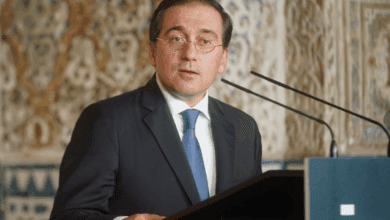
Núria Montserrat, who heads the Department of Research and Universities of Catalonia, continues to explore every corner of the historic building on Via Laietana more than a year into her tenure. Her desk is literally covered with folders of projects: from revising funding to updating the scholarship system and rethinking the structure of university programs. Despite the department’s compact size, its influence on the region’s future is increasingly felt.
This year, Catalonia has become a focal point in discussions about international scientific cooperation. Following a recent strike in support of Palestine, the issue of collaboration with Israeli research centers has come to the forefront. Regional authorities are still assessing the scope of such partnerships to avoid harming researchers working in Catalonia and to prevent hasty decisions without considering the impact on the scientific community.
Catalonia’s research system is already recognized as one of the leading ones in Europe, particularly in biomedicine, biotechnology, and quantum technology. However, the focus is now shifting to innovation. By 2030, the region aims to be among Europe’s fifty most innovative territories, prioritizing the development of new medicines, technologies for the space industry, and supercomputers. Plans include expanding support for scientists to ensure their discoveries more swiftly become real-world products.
The issue of retaining talented professionals remains pressing. Housing problems and low salaries complicate the situation. Various forms of support are available for graduate students, and the authorities have already assessed the condition of student dormitories, aiming to increase the number of available places. Despite these challenges, Catalonia continues to attract foreign students and researchers and is also working to create conditions for returning specialists who have left.
In 2026, the regional authorities will fully assume control over scholarship programs. A new model is currently being developed that will cover three scenarios: for local students wishing to study in Catalonia, for those planning to study in other regions, and for incoming students. Plans include the introduction of a single application portal, the ability to combine different types of support, and making the process more transparent.
The possibility of introducing scholarships to cover living expenses is under review and could be implemented in the coming years. However, authorities emphasize that free higher education is not yet possible: maintaining a balance between accessibility and the financial sustainability of universities is essential. Lowering tuition costs has already made universities more accessible, but the region is not ready to abolish fees entirely.
University funding is also changing: instead of annual budgets, there are plans to transition to multi-year programs, with a key focus on overseeing results in research, teaching, and the application of new knowledge. This approach will enable universities to plan their development with greater confidence and implement long-term projects.
In recent years, Catalonia has seen a surge of new initiatives in education and science. A ten-year infrastructure plan has been developed to support these efforts, and many projects receive European funding. However, authorities emphasize that each university receives individual projects to prevent inefficient allocation of resources.
The increase in new academic programs, especially at private universities, is closely monitored by a special council. Currently, there is a large-scale mapping of all existing areas of study in order to make future decisions on reducing or expanding particular specialties. Special attention is given to the needs of the labor market: the region lacks specialists in STEM fields (science, technology, engineering, mathematics).
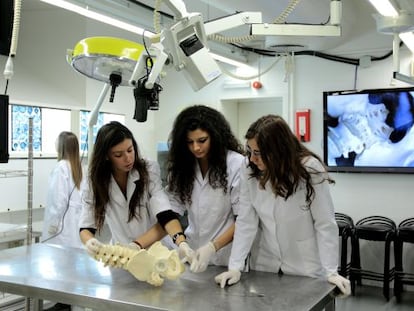
The question of whether to establish medical faculties at all universities has been decided positively: by 2032, the number of places for future doctors is expected to grow by nearly 50%. This will require expanding the network of clinical training sites and attracting more instructors.
As for a unified entrance exam system (PAU) across Spain, Catalonia is not yet ready to implement it. Changes to the exam procedure are expected soon to make the process more convenient for applicants and their families. Authorities have pledged not to repeat last summer’s communication errors that caused confusion, and grading criteria are now published in advance.