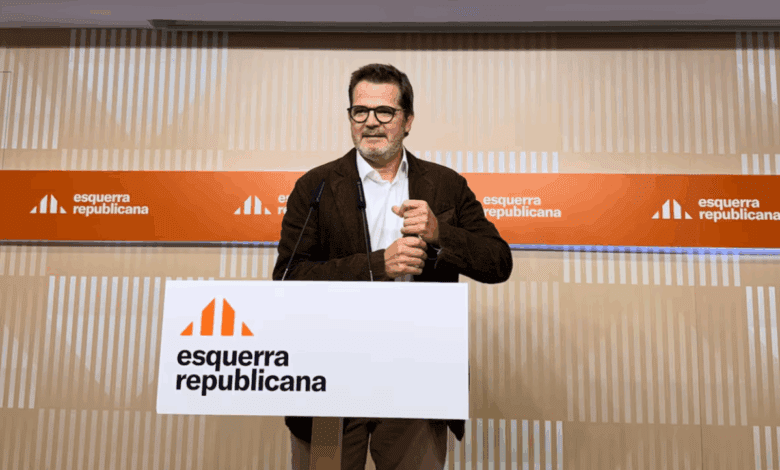
Catalonia is debating an initiative that could change the usual pattern of allocating government investments. The new consortium, proposed by the Esquerra Republicana de Catalunya (ERC) party, aims to unite the efforts of the central government and regional authorities to supervise and speed up the implementation of infrastructure projects. For local residents, this could mean not only new roads and facilities but also greater transparency in how funds are distributed, which is especially important given ongoing disputes over underfunding.
According to El Pais, the bill’s registration in Congress coincided with the moment when Salvador Illa’s government presented the current year’s budget plan. Republican support is needed for its approval in parliament, but so far they are unwilling to vote in favor, as they see no progress regarding the transfer of a share of tax revenues to the region. At the same time, setting up the consortium became one of the key points in the agreement between the Socialists and ERC when forming the new government of Catalonia.
The essence of the initiative
According to the authors’ proposal, the consortium must be established within nine months after the law is approved. It will begin operating no later than January 1 of the following year, and within a further twelve months, a separate joint stock company will be created. Management will be based on parity: half of the representatives will come from the Ministerio de Transportes y Movilidad Sostenible and the other half from the government of Catalonia. Key responsibilities include developing a long-term investment plan, overseeing project implementation, coordinating all public investors, and responding promptly to delays or deviations from the schedule.
In recent years, Catalonia has repeatedly raised concerns about insufficient infrastructure funding. Local authorities and civic organizations point to chronic delays in the construction of roads, railway lines, and other facilities. The new consortium aims to serve as a tool not only to accelerate these processes but also to strengthen both parties’ accountability for the outcome.
Political context
The introduction of such a structure is not just a technical solution but part of complex negotiations between Madrid and Barcelona. The issue of transferring a share of tax revenues remains a sticking point: the Republicans insist on greater financial autonomy, while the central authorities are in no hurry to make concessions. At the same time, as ERC points out, establishing the consortium does not replace discussions on tax reform but rather helps address the chronic infrastructure deficits.
Interestingly, similar disputes over resource allocation and oversight of construction projects are also arising in other regions of Spain. For example, there was a recent conflict in Valencia over exchanging municipal land for apartments for several dozen families—a situation analyzed in detail in the article about controversial decisions on land-for-housing exchanges. These cases highlight how pressing the issue of transparency and the effectiveness of investment management is at the local level.
What will change for Catalonia
If the bill is passed, Catalonia will gain a new tool to control spending and project deadlines. This could become a step toward reducing tension between the regions and central government, as well as building greater trust in the process of distributing state investments. However, much will depend on how effectively both sides can reach agreements on the details and avoid bureaucratic delays.
In recent years, Spain has faced the need to modernize its infrastructure, especially in regions with high population density and strong economic activity. Catalonia has traditionally led in investment volume, but issues of oversight and transparency remain relevant. Other regions of the country are also launching initiatives to create joint structures for managing major projects, though these do not always yield the expected results. It is important for new mechanisms to not only speed up construction but also deliver tangible benefits to residents.