The restoration of rail service in Catalonia directly impacts the daily lives of thousands of local residents. The reopening of the section between Manresa and Cervera was a long-awaited event, but a return to the regular schedule is still a long way off. Speed restrictions, forced transfers, and temporary routes continue to inconvenience passengers, and the transport system remains under significant strain.
Limited traffic
At a press conference, representatives of the Catalan government and Spain’s Ministry of Transport announced the partial restoration of service on the R4 line between Manresa and Cervera. However, even after the reopening, trains are forced to operate at reduced speeds: more than two hundred segments of the network are subject to speed restrictions. The reasons include ongoing repair work and the aftermath of recent emergencies.
Authorities have promised that by the end of February, about 50 temporary restrictions related to emergency work will be lifted, and by April, another 50 will follow. Nevertheless, half of all restrictions are tied to large-scale projects such as the modernization of the Mediterranean Corridor, and their removal is not expected before the end of the year.
Transfers and alternatives
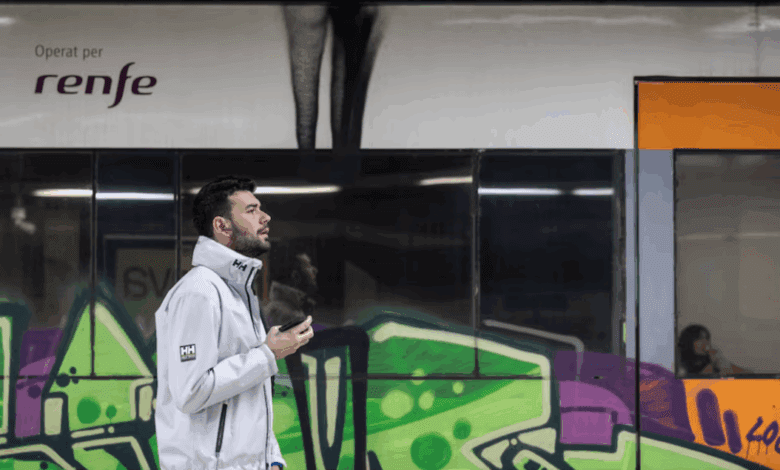
Despite partial restoration, many passengers are still forced to transfer to buses or other trains. On the R4 line between Sant Sadurní d’Anoia and Martorell Central, the break in service remains, so passengers have to use ground transport. Trains do not run directly between Terrassa and Manresa—passengers switch to special shuttle trains on this section.
The R1 line, connecting L’Hospitalet and Maçanet-Massanes, also requires transfers: in Blanes and Maçanet-Massanes, passengers have to change trains. On the R2 line, although there are no service gaps, a speed restriction remains in place between Bellvitge and Sants due to signaling issues. More work and the temporary introduction of bus routes are expected here in the near future.
A long road to normalization
The R3 line, linking L’Hospitalet de Llobregat and Puigcerdà, remains closed to passenger traffic—only buses operate here, with trains used solely for technical purposes. The R8 line, which recently reopened after tunnel repairs in Rubí, currently serves only freight trains, so passengers must continue to use buses.
Regional routes in the south, between Reus and Riba-roja d’Ebre, have also not been restored: train speeds here are so slow that transportation is provided by buses. Authorities note that full recovery will require the completion of dozens of repair works, only a fifth of which have been finished so far.
Investments and challenges
In recent weeks, emergency work has been carried out on 91 critical sections of the rail network, with around 90 million euros allocated for these projects. However, only 20 of them have been completed, and the deadlines for the remaining works remain uncertain. Authorities emphasize that they cannot afford hasty decisions that could undermine public trust in the system.
During recent storms and extreme weather events, major new accidents were avoided thanks to slope clearing and infrastructure reinforcement. More than 400 specialists were involved in dealing with the aftermath and maintaining network operations. Despite these efforts, passengers continue to face delays, transfers, and ongoing uncertainty.
The situation with railway transport in Catalonia has repeatedly sparked public debate. One recent report took an in-depth look at the challenges residents face due to overcrowded bus routes and frequent timetable disruptions — you can read more in the article about transport collapse and bus overcrowding in Catalonia.
In recent years, Spain’s railway infrastructure has faced repeated serious challenges. Waves of strikes, extreme weather, and technical malfunctions have resulted in widespread delays and cancellations. These issues have been particularly acute in major cities and tourist regions, where alternative routes quickly become congested. In 2024, a similar situation unfolded in Barcelona, when an accident on the R2 line forced thousands of passengers to switch to buses, and it took several weeks to restore regular service. Such crises highlight the importance of timely investment and modernization of the transport system to prevent similar scenarios in the future.