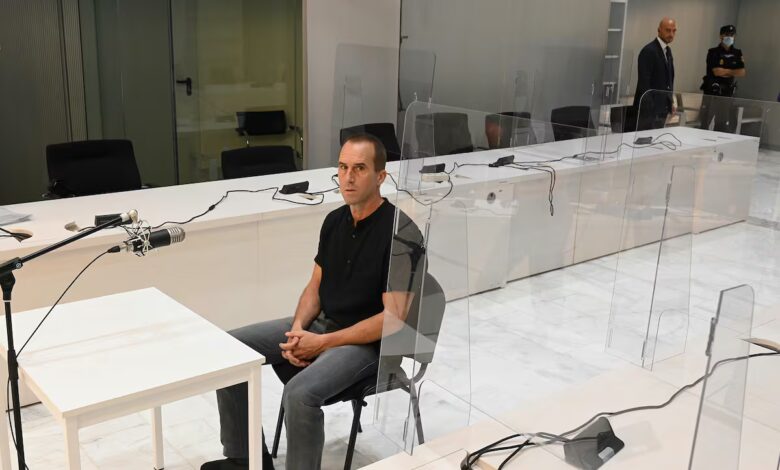
Debate reignites in Spain over policies for dealing with convicted terrorists. Authorities in the Basque Country have granted partial freedom to former ETA leader Garikoitz Aspiazu Rubina (Txeroki). This decision allows him to leave Marutene prison in San Sebastián on weekdays, but he must spend the nights at the correctional facility. For many Spaniards, this move came as a surprise and raised questions about the principles of justice and rehabilitation.
According to official sources, the granted status is not the third degree of freedom but represents an intermediate measure set out in Article 100.2 of the Prison Regulations. This approach is used to prepare inmates for reintegration into society, typically through employment or participation in volunteer programs. However, in the case of the former ETA leader, convicted of several serious crimes, the authorities’ decision has sparked a wave of criticism and concern.
Legal intricacies
The question of granting partial freedom to Txeroki now lies with the Central Court for the Supervision of Sentences. The Prosecutor’s Office of the National Court is to prepare an opinion, but it will not be binding. The final decision will rest with the judge, who will determine whether the former ETA chief can benefit from the new arrangement.
García Aspiazu Rubina was transferred in 2024 from the French prison of Lannemezan to the Spanish correctional facility of Martutene. He is considered one of the key organizers of ETA’s activities prior to his arrest in 2008. In 2011, he was sentenced by the National Court to 377 years in prison, and in France he served several terms totaling more than 30 years.
Public reaction
The decision to grant partial freedom to a figure involved in such high-profile cases sparked a strong reaction among the public and politicians. Many believe that such measures may be seen as a sign of leniency toward those convicted of terrorism. At the same time, supporters of penitentiary reform insist on the need to reintegrate former inmates into society if they show a willingness to change.
In 2015, Aspiazu Rubina was again sentenced in Spain to nine years for organizing a car bombing in Oropesa (Castellón) in 2007. Later, in 2018, he received another 18 years for attempting to murder journalist María Luisa Guerrero with a bomb sent by mail. These episodes remain in the memory of Spaniards as reminders of the tragic chapters in the country’s recent history.
Context and consequences
In recent years, Spain has faced a dilemma: how to balance principles of justice and security with the challenge of reintegrating former members of radical organizations. The application of Article 100.2 to those convicted of terrorism has repeatedly sparked heated debates. Each such case triggers a new wave of discussions about the boundaries of what is permissible and how the state should respond to attempts by former terrorists to return to normal life.
Reflecting on recent events, it is worth noting that similar decisions have also been made regarding other former ETA members, consistently accompanied by protests from victims and their families. In 2025, several individuals convicted of terrorism cases were also granted partial freedom, which sparked resonance in the media and political circles. The issue of balancing punishment and the possibility of rehabilitation remains one of the most pressing in Spanish society.