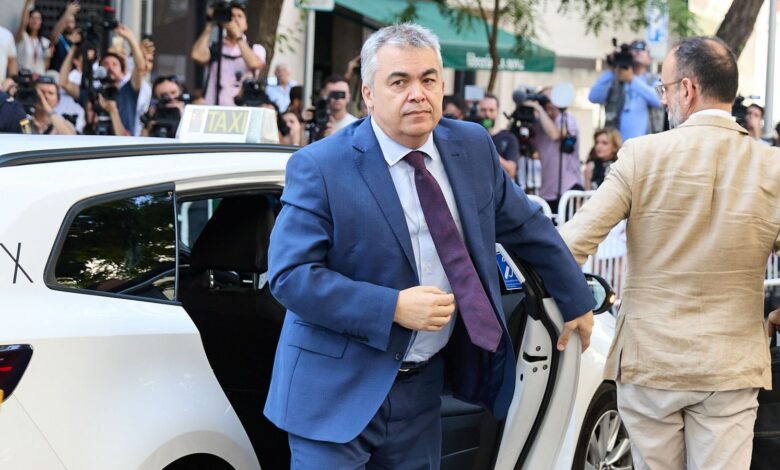
The Supreme Court of Spain has decided to release Santos Cerdán from custody, replacing his imprisonment with more lenient measures. Judge Leopoldo Puente concluded that the risk of evidence being destroyed in the corruption case has significantly diminished. The former organizational secretary of the PSOE is now required to report regularly to the court and is barred from leaving the country—his passport has been confiscated.
Cerdán’s release was made possible following a series of searches conducted last week at the offices of major companies linked to the investigation, including Acciona buildings in Bilbao and Madrid, as well as the home of the former head of the company’s construction division. Investigators believe that after these actions, the main evidence has already been collected, making any attempts to hide or destroy it now unlikely.
Cerdán was the only defendant in the case who remained in custody on suspicion of involvement in a large-scale corruption scheme related to the allocation of public contracts during the period when the Ministry of Transport was headed by José Luis Ábalos. The former party official had been held at Soto del Real prison (Madrid) since late June, while his lawyers repeatedly sought his release, pointing to unequal conditions compared to other suspects, including Ábalos himself and his former advisor Koldo García.
Investigation intensifies, but grounds for arrest disappear
Previously, the judge insisted on keeping Serdán in custody due to his key role in the scheme. According to investigators, he was the one coordinating contacts with those who paid illegal rewards and could have tried to hide or destroy evidence. However, after receiving a new report from the organized crime unit—detailing the results of searches and the seizure of a large amount of documents and equipment—the court concluded that the risk of evidence being destroyed is now minimal.
The court document notes that the collected materials not only confirmed suspicions of criminal activity, but also opened new avenues for investigation. Nevertheless, having serious evidence alone is not enough to justify further detention unless there is a risk of repeat offenses or escape.
No risk of escape or new offenses
The judge also saw no grounds to believe that Serdán might evade justice or continue illegal activities. He currently holds no position in the party and has no access to resources that could allow him to influence the investigation. The court imposed measures that allow his movements to be monitored and prevent him from leaving the country.
The maximum period of detention for Serdán was set to expire at the end of December, but the judge decided not to wait until then, as the key stages of the investigation have already been completed. Now, the former party official will be released but will remain under strict court supervision while the investigation into his possible involvement in bribery, participation in a criminal organization, and abuse of influence continues.