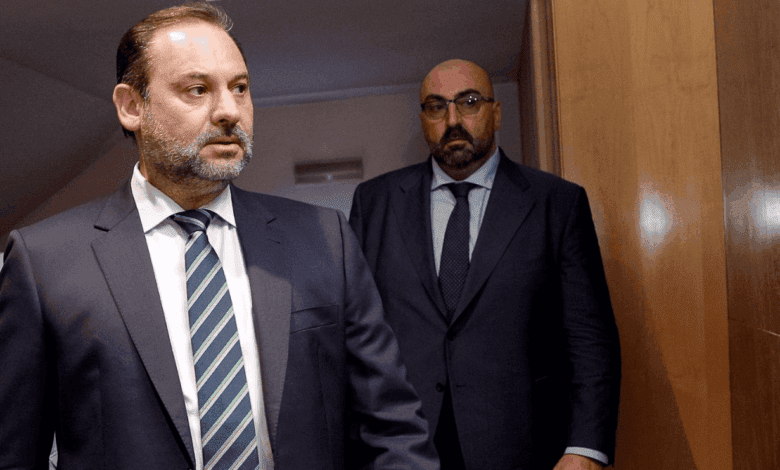
The Spanish Socialist Workers’ Party (PSOE) and the government have found themselves at the center of a major reputational crisis. In the past six months, a second former organizational secretary has ended up behind bars. This development has sparked a wave of emotion among party leadership and rank-and-file members alike. Many ministers and party officials admit that the case of Santos Cerdán was less painful since he had support until the very end. With José Luis Ábalos, it was a different story: he was removed from leadership in 2021 and, in February 2024, expelled from the party itself after Koldo García was arrested. Despite these actions, most agree: Ábalos’s arrest, after years as Pedro Sánchez’s right-hand man, has dealt a significant blow to the party’s reputation.
Leadership’s response and attempts to contain the damage
PSOE officials emphasize that the party acts strictly and transparently, making no allowances for corruption. They insist that from the beginning they responded decisively to prevent further harm. Behind the scenes, however, there is disappointment—even the most loyal supporters admit the party’s prestige has suffered. The prospect of snap elections is not currently on the table; most party leaders insist on completing the current legislature despite mounting pressure and criticism.
Pedro Sánchez, according to those close to him, remains calm. He believes he has done everything possible, expelling all those implicated in the scandal from the party. Sánchez is not worried about possible revelations from Ábalos, who has already started publicly accusing the president’s family, specifically his wife Begoña Gómez, of being involved in the Air Europa rescue case. The government is confident: there is no evidence against Sánchez or the party, and Ábalos’s statements are described as a desperate attempt to justify himself in the face of a possible prison sentence.
Focusing on positive action and the opposition’s response
The president and his team are betting on positive initiatives to restore public trust. On the day of Ábalos’s arrest, Sánchez chose not to comment on the scandal, instead highlighting the agreement to raise civil servants’ salaries by 11%. The government believes that such measures, even if not always visible amid high-profile scandals, gradually strengthen the party’s position and counter criticism from conservative and far-right forces.
Nevertheless, even ministers admit: for the first time in Sánchez’s tenure, it is not just a former minister who has landed in prison, but someone who has long been his close ally. The atmosphere in parliament was tense: members of the left avoided the press, while the opposition from the Partido Popular (PP) and Vox openly expressed satisfaction with the situation. Anxiety is growing within the PSOE: many fear that a string of scandals in key party structures could seriously complicate the election campaign and undermine grassroots support.
Internal Criticism and Consequences for the Future
Several regional leaders of the PSOE do not hide their disappointment. They point out that they have to justify themselves to voters for the actions of former leaders, which is especially difficult in an election year. One of the party federation secretaries bitterly notes: “Barely a week passes without another organization secretary ending up in jail.” Senators recall that it was Sánchez who entrusted Ábalos and Serdán with running the party after his 2017 primary victory, and now both are at the center of high-profile cases.
Emiliano García-Page, a well-known critic of the PSOE leadership, says that the party has become a victim of its own officials. He emphasizes that even if the organization is not directly at fault, the reputational damage is obvious and affects all members. According to him, when the leader’s closest associates face investigation or imprisonment, it inevitably shapes public opinion and erodes trust in the party as a whole.
Former leaders’ assessments and demands for justice
Former Prime Minister Felipe González indirectly criticized Sánchez’s response to the scandals, saying that the politicization of justice is a myth and that the real issue is politicians’ failure to take responsibility, often shifting decisions onto the courts. PSOE Secretary in La Rioja, Javier García, insists that those responsible should be held fully accountable under the law, calling them “shameless” and expressing disgust at the situation.
Overall, the situation around the PSOE remains tense. Internal party divisions, pressure from the opposition, and declining voter confidence are casting doubt on the party’s stability and prospects in the upcoming elections. The leadership now faces the challenge of not only restoring its reputation but also convincing the public of its ability to govern the country in times of crisis.