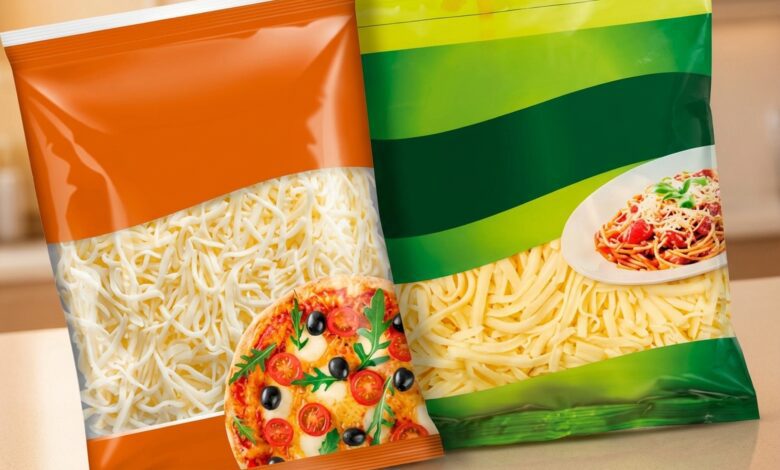
A sudden warning from Spanish health authorities has raised concerns among shoppers and retailers. Grated cheese sold under the brands Alteza, Albéniz, and Froiz has been found to contain foreign objects resembling wood chips. This information is particularly important for residents of Andalusia, Galicia, Cantabria, Castile and León, Castile-La Mancha, and Navarre, where the products have already reached store shelves.
The alert was issued by health officials in Navarre, who reported the problem through the national rapid information exchange system. As a result, inspections began across the country at retail outlets and warehouses to prevent the dangerous batches from reaching Spanish households. Authorities do not rule out the possibility that some of the products could have been shipped to other regions, which broadens the scale of the issue.
Which products are under suspicion
Experts focused on specific batches of grated cheese: gouda from Alteza and Albéniz, as well as a mozzarella and provolone blend from Froiz. All have the same batch number — 2426026, and the expiration date is June 2026. These products are currently being withdrawn from sale to prevent potential health risks.
Customers who have already purchased cheese from these batches are advised not to consume it and to return it to the store. According to RUSSPAIN.COM, health authorities are actively informing retail chains and overseeing the recall process. Officials stress that these are precautionary measures, but do not rule out the possibility that the situation could affect other regions as well.
Response and consequences
The food market in Spain has previously faced similar incidents where foreign objects were found in products. However, the current situation stands out due to the scale and the rapid response from government bodies. The implementation of a real-time information exchange system enabled authorities to promptly warn consumers and minimize potential damage.
No victims have been reported so far, but the incident has already sparked widespread discussion among consumers. Many are questioning how such contaminants could end up in a product that undergoes multiple quality control stages. Representatives of retail chains assure that they are cooperating with the authorities and doing everything possible to protect customers.
Quality control and new challenges
The case involving grated cheese again raises concerns about the reliability of quality control at food processing plants. In recent years, Spain has tightened its food safety regulations, yet such incidents still occur. Experts note that, even with modern technologies, it is impossible to completely eliminate the human factor.
Recalling recent events, it is worth noting that in 2025, a large batch of meat products was recalled in the country due to the discovery of plastic. The consequences were quickly contained at the time, but consumer trust in brands was shaken. The current situation with cheese could prompt further inspections and a review of production standards.
In recent years, Spanish consumers have become more cautious when choosing food products, especially following several high-profile cases of dangerous contaminants being detected. In 2024, for instance, a major supermarket chain found metal in packages of baby food, prompting a large-scale inspection of the entire product line. Such incidents are pushing manufacturers to tighten controls and introduce new quality-tracking technologies. Nevertheless, cases involving foreign objects in food continue to occur, highlighting the ongoing need for constant monitoring and swift action from both authorities and businesses.