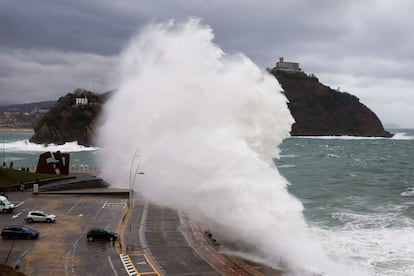
The powerful storm Oriana has severely disrupted daily life in Spain, especially in the eastern regions. Strong winds and heavy rains have already caused train cancellations, road closures, and urgent evacuation measures. Authorities are forced to respond to safety threats by restricting movement and warning of new risks.
A red-level weather alert has been declared in the province of Castellón due to hurricane-force winds. The region’s roads now have speed restrictions in place, and overtaking is banned for heavy vehicles. In some areas, traffic has come to a complete halt: a 16-kilometer section of the A-33 highway in Alicante is closed, and access to the Navacerrada mountain pass near Madrid is blocked.
Transport under attack
Rail service has become one of the hardest hit. Renfe has cancelled all long- and medium-distance trains between Valencia and Cataluña, including the popular Euromed and Intercity routes. No alternative travel options have been offered to passengers. Additionally, three high-speed trains on the Valencia–Castellón route will remain out of service for the next 24 hours.
In Cataluña and the Comunidad Valenciana, civil protection agencies have sent emergency alerts to residents’ mobile phones. In Tarragona and Castellón, wind gusts have exceeded 170 km/h. Firefighters and rescue teams are working nonstop, responding to dozens of calls related to fallen trees, collapsed structures, and the urgent need to secure hazardous sites.
Forced evacuations
In Castilla y León, the situation has worsened due to a sharp rise in river water levels. In San Esteban de Gormaz (province of Soria), the evacuation of residents has begun: the Duero river is almost at 5 meters, and the flow rate exceeds 275 cubic meters per second. The local La Rambla institute building has been prepared to accommodate those evacuated.
Precautionary measures have also been introduced in other regions. Cantabria has recorded unprecedented rainfall—almost 74 liters per square meter in just one day. In Sierra Nevada, the ski resort remains closed for the fourth consecutive day after road damage in the area. Across cities and towns nationwide, mass events have been canceled, parks closed, and outdoor activities forbidden.
The whole country on alert
Seventeen autonomous communities and both autonomous cities of Spain started the morning with varying alert levels. Coastal areas are bracing for waves up to 12 meters high, while mountain regions face the threat of avalanches and heavy snowfall. Authorities urge residents to stay indoors unless necessary and to closely follow updates from emergency services.
The situation recalls events in Andalusia, when storm Leonardo shut down hundreds of roads and forced thousands to leave their homes—read more in the report on the consequences of mass evacuations and school closures.
In recent years, Spain has increasingly faced extreme weather events. Storms like Oriana cause transport disruptions, mass evacuations, and significant economic losses. A surge in such catastrophic incidents was also recorded last year, when heavy rains and strong winds paralyzed airports and railways, prompting states of emergency in some regions. Experts note that these phenomena are becoming more frequent and unpredictable, requiring authorities and the public to be especially prepared for rapid response.