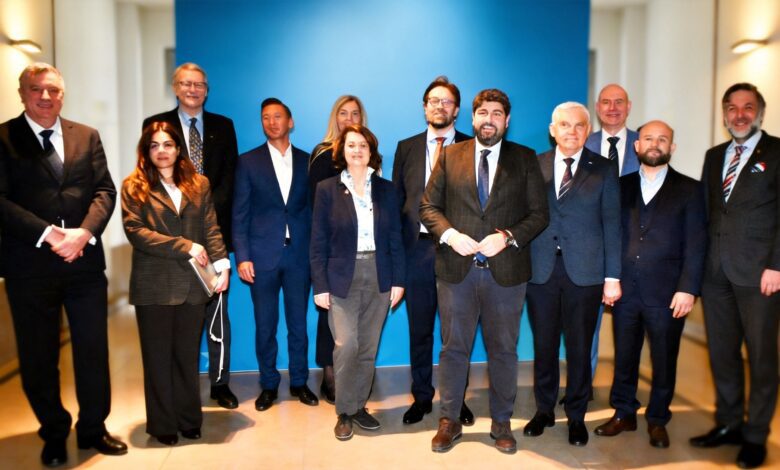
Amid growing instability on the international stage, Spain faces the need to rethink its approaches to defense and security. For the country, this means not only new challenges but also an opportunity to strengthen its position within European structures. In Brussels, discussions are underway about how regions like Murcia can become key players in shaping the future defense policy of the European Union.
The role of regions in defense
In recent years, the European Union has increasingly focused on the potential of regional initiatives. Representatives from Spain’s autonomous communities emphasize that without active involvement from local bodies, it is impossible to create an effective and resilient defense system. In Brussels, the president of Murcia, Fernando López Miras, proposed expanding the powers of regions within European defense programs. According to him, it is at the local level where innovative solutions are developed that can boost the competitiveness of the entire sector.
During meetings with the leadership of the European Defence Agency, officials discussed ways to integrate regional projects into pan-European initiatives. Special attention was given to funding and the creation of conditions for the development of technology startups and research centers. Murcia is already implementing the Caetra program, which brings together small and medium-sized businesses, research teams, and technology companies in search of new security solutions.
Funding and Innovation
One of the main topics of the talks was the need to increase funding for regional projects. Representatives from Murcia insist that without additional investment, it is impossible to achieve a technological breakthrough and reduce Europe’s dependence on external suppliers. The Caetra program has already managed to create a unique ecosystem where startups, research institutes, and industrial companies work together. This approach accelerates the implementation of innovations and raises the expertise of professionals.
According to russpain.com, integrating regional initiatives into pan-European programs could be a key factor in building an independent defense industry. Notably, Murcia is not focusing solely on military projects—many developments are finding applications in the civilian sector, which drives regional economic growth and creates new jobs.
Strategic prospects
Coordination between regions and central EU bodies was also discussed in Brussels. Spanish representatives emphasize that only with the active involvement of all levels of government can real progress be achieved. It is important that regions do not remain onlookers, but become full participants in the decision-making process. This approach has already proven effective in other areas, such as energy and digitalization.
During López Miras’s visit, meetings were held with representatives of the European Commission and the Committee of the Regions. Discussions focused on new formats of cooperation, including dual-use programs where technologies can be applied in both military and civilian sectors. Such initiatives have already proven their relevance, as demonstrated by the experience of other European countries seeking alternatives to traditional suppliers of strategic resources, as recently discussed in the article on the search for new markets for tungsten — European companies seek alternatives to China in the metals market.
Context and trends
In recent years, the European Union has increased its focus on defense and security issues, especially amid growing geopolitical risks. In 2025, a special working body was established under the Committee of the Regions to integrate local initiatives into broader European strategies. Spain has been actively involved in these efforts, offering its own solutions and sharing its experience implementing innovative projects. Other EU countries are also seeing a trend toward decentralizing defense policy and expanding regional powers.
At the same time, Europe is seeing growing interest in the development of dual-use programs, where technologies can be applied both for military and civilian purposes. This approach not only enhances security but also stimulates economic growth, creates new jobs, and attracts investment. In the coming years, further expansion of such initiatives is expected, which could significantly change the structure of the European defense industry.