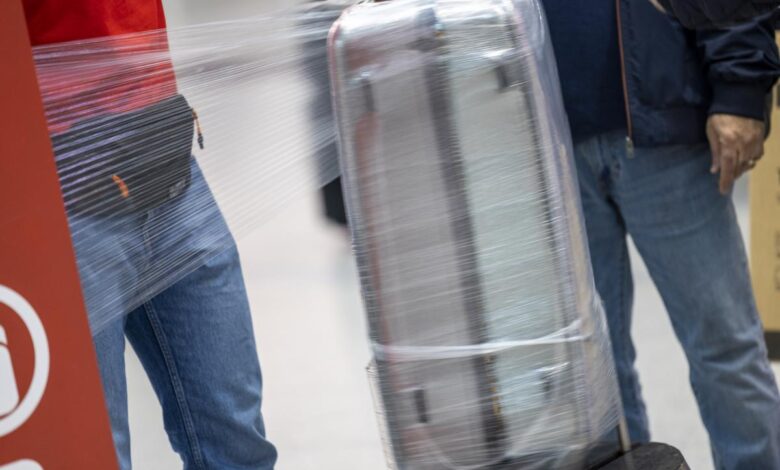
In the coming years, a familiar scene for millions of Spaniards and visitors—suitcases tightly wrapped in plastic right at the airport—will disappear. European authorities have declared war on single-use plastics, and now even such a popular service as luggage wrapping with stretch film is being banned. Gradual restrictions will start as soon as 2027, and by 2030, plastic wrappings must be completely eliminated from all terminals in Spain and other European Union countries. For many, this came as a surprise: luggage wrapping was seen not only as a way to protect belongings from theft and damage, but also as a profitable business for airports and private companies.
The decision has sparked a wave of emotions among travelers and industry workers. Some worry about the safety of their belongings, others are concerned about jobs and income. But European officials remain firm: the fight against plastic waste is reaching a new level, and passengers’ habits will have to change.
What’s changing
According to the new regulations, all types of single-use plastic baggage wrapping, including the familiar stretch film, must be completely phased out by early 2030. Until then, airports and operators will have time to adapt: starting in 2027, the use of plastic will be gradually reduced, followed by a full ban. Authorities emphasize that this is not only about environmental care, but also about solving technical issues: plastic wraps often cause breakdowns on baggage belts, complicate inspections, and increase the amount of hard-to-recycle waste.
Until now, Spain has not had a national ban on plastic baggage wrapping—in fact, the service has been heavily promoted and generated substantial profits. At major airports like Madrid and Barcelona, wrapping stations greet passengers right at the check-in counters. The service costs between 5 and 10 euros per suitcase, and the flow of customers remains steady even in the low season.
Business takes a hit
For companies specializing in baggage wrapping, the new rules came as a real shock. The turnover of this market in Spain is estimated at tens of millions of euros annually. Major players pay airports fixed fees for the right to operate in the terminals, and revenues from wrapping, vending machines, and related services account for a significant portion of commercial income at the country’s largest airports. In just half a year, such services generate hundreds of millions of euros, and for some companies this is the main source of revenue.
Now businesses will have to look for new solutions or leave the market. Operators are already discussing possible alternatives: switching to reusable covers, launching new luggage protection services, and collaborating with travel accessory manufacturers. However, it is clear that such an abrupt change will impact revenues and could lead to job cuts.
Passengers confused
For many travelers, the disappearance of a familiar service came as an unpleasant surprise. They now have to find other ways to protect their suitcases from scratches, dirt, and unauthorized access. Authorities suggest paying attention to alternatives: sturdy luggage straps, TSA-locks that can be opened with a special key during inspection, as well as reusable elastic covers that can last for years. These options are already on sale, but not all passengers are ready to give up the usual plastic yet.
Some fear the new rules will lead to an increase in luggage theft and damage, while others worry that the cost of alternative protection methods will be higher. Debates rage on social media: some support the initiative for environmental reasons, while others consider it unnecessary and inconvenient.
Environmental front
European authorities justify their decision not only by environmental concerns, but also by the need to solve real airport problems. Plastic wraps, which are discarded after every flight, are hardly ever recycled and often cause blockages and breakdowns on baggage belts. Moreover, cities that welcome millions of tourists are forced to spend extra funds on disposing of packing waste left after luggage wrapping.
Some European airports have already gotten ahead of the new requirements: for example, in Germany, certain terminals stopped using plastic even before the EU-wide regulations. In Spain, however, the status quo remains for now, but the situation will change dramatically in the coming years.
Spain at a crossroads
While national legislation does not prohibit luggage wrapping in plastic, airports continue to profit from this service. Operators and airlines recommend that passengers use wrapping for extra protection, and many travelers cannot imagine their trip without the familiar film. However, as 2027 approaches, the situation will start to change: airports will have to revise their services, and passengers will need to adapt to the new reality.
The question of how the luggage wrapping market will change and which alternatives will become popular remains open. One thing is clear: the era of plastic wrapping in Spanish airports is coming to an end, and this event is already sparking heated discussions among everyone involved in travel.