Spanish society stands on the threshold of change, as traditional democratic mechanisms face challenges from instability and the rise of anti-system movements. Amid declining trust in institutions and an increasingly unpredictable international order, an initiative has launched in Madrid that could shift the balance of power both within the country and beyond. A new committee established at Fundación Independiente aims to strengthen civil society and seek solutions for the future of Spain and Europe.
Crisis of trust
At a recent Fundación Independiente congress, alarming assessments were voiced: the international system is coming apart at the seams, and traditional centers of influence are losing their monopoly on decision-making. The president of Fundación Elcano, José Juan Ruiz, noted that the world is moving toward multipolarity, where neither the US nor China will be able to dictate terms on their own. His remark that Europe is made up of countries that either recognize their smallness or do not sparked a lively debate among attendees.
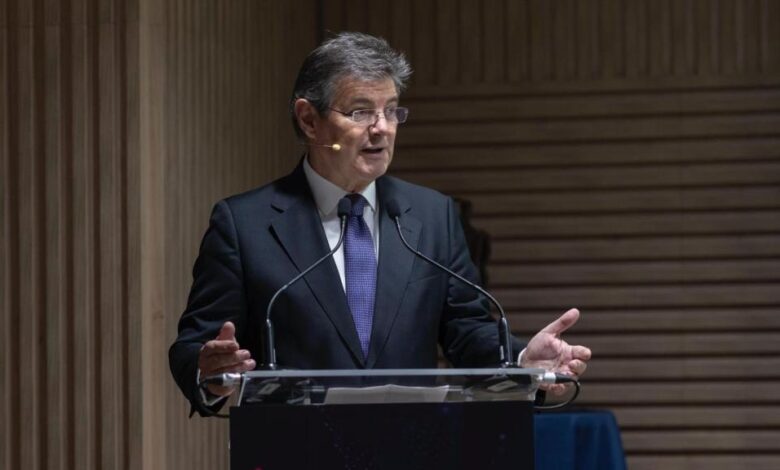
Philosopher Javier Gomá and former minister Rafael Catalá emphasized that liberal democracy requires renewal, not destruction. In their view, now is the time to resist pessimism and search for ways to restore trust between citizens and the state. Catalá reminded the audience that any change begins with a small but organized group capable of influencing public opinion.
Economic challenges
The focus of the discussion was also on the economic agenda. Ruiz proposed a radical move — issuing eurobonds for a quarter of the total debt of EU countries. According to him, this measure would accelerate reforms and inject new life into the economy, while remaining true to European values. In the congress hall, participants did not hide their skepticism, but the idea sparked interest and lively debate.
The past was also recalled: Fundación Independiente was established in 1987, at a time when Europe was just beginning to recognize its role after the Cold War. Over the decades, the organization has witnessed the fall of the Berlin Wall, the rise of new forms of populism, and the need to rethink democratic institutions. Today, according to experts, Spain once again faces a choice—reform the system or risk losing it.
Civil society
The new committee formed by Fundación Independiente has brought together renowned experts: law professor Francesc de Carreras, head of the España Mejor organization Miriam González, former president of Madrid Joaquín Leguina, Fundación Hay Derecho secretary Elisa de la Nuez, as well as former ministers José Manuel García-Margallo and Eduardo Serra. Their task is to develop a strategy that will help Spanish society confront new challenges and preserve the foundations of democracy.
During the discussions, various opinions were voiced about the country’s future. Some insisted on the need for urgent reforms, while others called for caution and maintaining a balance between tradition and innovation. Particular attention was paid to Spain’s role in the European context: will the country become a model for others or remain in the shadow of more influential players?
A Turning Point
Among the congress participants, there was a sense that Spain is experiencing a historic moment. The question of what the next step will be remains open. However, one thing is clear: without active citizen involvement and institutional renewal, the country risks facing further social fragmentation and the strengthening of radical attitudes.
In recent years, Europe has already faced waves of protests and the rise of anti-system movements. Remember, for example, the mass demonstrations in France, the crisis of trust in political parties in Italy, or debates about the future of the European Union after Brexit. Similar processes affect Spain, where issues of reform, economic stability, and the role of civil society are becoming increasingly relevant. As traditional answers are no longer sufficient, the search for new solutions comes to the fore.