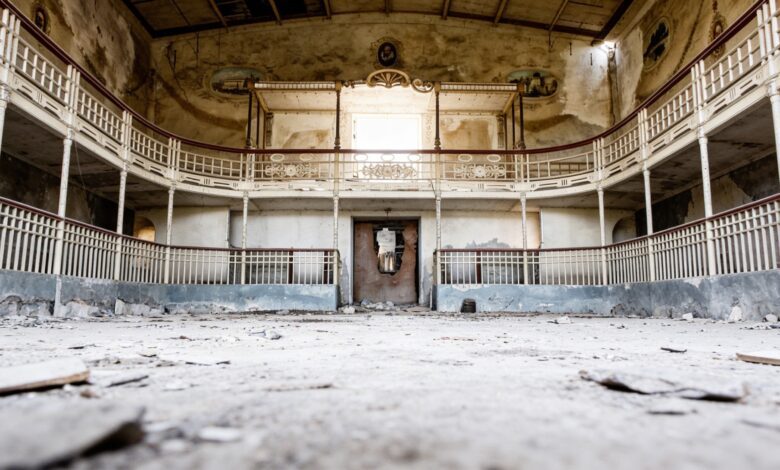
A debate over the preservation of historical heritage is heating up in Spain, potentially impacting thousands of sites across the country. The Supreme Court is reviewing the case of the Santa Eulalia colony in Alicante province, where derelict buildings have become a symbol of official inaction. The court’s ruling could set new standards for monument protection, especially significant for regions with rich histories and unique architectural ensembles.
Founded in 1887 between Sax and Villena, the Santa Eulalia colony was once considered a model of utopian socialist settlement. It featured factories, a theater, a palace, residential housing, and even its own railway station. However, economic decline and the events of the Civil War led to the gradual abandonment of the complex. Today, most of the buildings are on the verge of collapse, despite being designated as a cultural heritage site in 2016.
Historic complex on the brink of disappearance
The project was implemented by the Conde de Alcudia and his cousin, the Vizconde de Alcira, on a 138-hectare site. At the heart of the settlement stood a 17th-century chapel, surrounded by a flour factory, a distillery, wine cellars, and a palace with twelve rooms. Houses, a shop, a casino, and the Cervantes theater were built for the workers. At its peak, up to 200 people lived and worked here, with railway access to the colony. After 1925, economic hardship and war hastened its decline, and today its ruins serve as a reminder of former grandeur.
According to El Pais, the local authorities of Sax and Villena, where the colony is located, have not taken significant action to save the complex. Sax limited itself to issuing fines and an order to demolish the unsafe building, while Villena showed no initiative. In 2023, the regional government refused to fund a study on the restoration of the colony. As a result, the site has been left on its own, and its condition continues to deteriorate.
Legal battle over the heritage
The issue of Santa Eulalia’s fate reached the Supreme Court thanks to private initiative. An individual filed a lawsuit against the Sax municipality, which had refused to assess the state of the buildings and to require the owners to ensure their preservation. The court of first instance and the appellate court in Valencia sided with the authorities, referring to the fact that the municipality does not own the properties and can only monitor compliance with the law. However, the plaintiff disagreed with this approach and appealed to the Supreme Court, arguing that there is no clear legal precedent on the responsibilities of the administration in such cases.
The Supreme Court has recognized that the issue requires the development of unified standards. Judges intend to specify what concrete actions authorities must take to prevent the destruction of monuments, regardless of ownership. Particular attention is given to how citizens’ rights to protect cultural heritage are exercised through public lawsuits. As El Pais notes, the decision in the Santa Eulalia case could set a precedent for the entire country and affect the fate of over 17,000 protected sites.
Unified rules nationwide
Supreme Court judges plan to review the provisions of Law 16/1985 on national historical heritage to resolve inconsistencies between decisions of different regional courts. Previously, courts in Madrid and Murcia have already required local authorities to actively prevent the destruction of monuments instead of taking only formal measures. Now, the Supreme Court’s aim is to establish this approach nationwide and eliminate the possibility of administrative inaction.
The court’s decision in the Santa Eulalia case is final and binding on all authorities. Experts believe it could shift attitudes towards preserving historical sites not only in Valencia but in other regions as well. The question of the fate of unique monuments is becoming increasingly relevant amid closures of scientific and cultural institutions, such as the recent shutdown of the only science museum in San Sebastián— the closure of Eureka! sparked a wave of discussions about the future of cultural heritage.
Context and similar cases
In recent years, cases have become more frequent in Spain where historic buildings and complexes are at risk of disappearing due to lack of funding and clearly defined government responsibility. Across various regions, activists and residents are increasingly turning to the courts to seek protection for heritage sites. Analysis by russpain.com shows a rise in such cases, especially in smaller towns and rural areas with limited resources. The issue of preserving cultural heritage is fueling public debate and calls for new solutions at the state level.