In the northern part of Gran Canaria, far from the bustling tourist centers, lies one of the most picturesque corners of the archipelago — the municipality of Firgas. Known to locals and travelers alike as the “balcón del Atlántico,” this place offers not only breathtaking panoramic views but also a unique atmosphere created by the constant murmur of water flowing right through its streets.
Firgas is the smallest municipality on the island, covering just 15 square kilometers. Situated more than 460 meters above sea level, it offers views not only of the northern coast of Gran Canaria but, on clear days, also of the neighboring islands of Tenerife and Fuerteventura. However, its main feature is water. The town, known during the time of the conquest as Afurgad (Afurgad), has a history inextricably linked to its abundance of springs. It was these water sources that allowed the first settlers in the 15th century to create an elaborate system of channels for irrigating sugar cane plantations, and later, for producing gofio, the traditional Canarian flour.
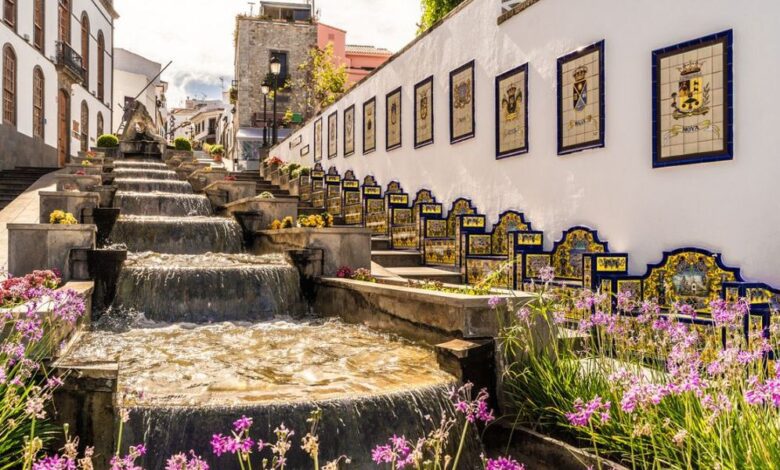
Firgas’ connection with water is so strong that it is home to the source of one of the most renowned mineral water brands in the Canary Islands — Agua de Firgas. This natural feature has shaped the cityscape as well. The central streets are adorned with artificial cascades and fountains, making a stroll through Firgas especially pleasant and refreshing.
Begin your exploration of the city from its historic center. The Iglesia de San Roque, built on the site of a 16th-century chapel, is a must-see along the route. Nearby, an observation deck offers some of the best views of the northern part of the island. Not far from here stands a monumental fountain, erected in 1995 as a symbol of the region’s water wealth.
The cultural heart of the municipality is the Casa de la Cultura. This building, constructed in 1872, once served as a hotel for visitors to the Azuaje thermal springs. Today, it houses a library and an exhibition hall. Next door is the Ayuntamiento de Firgas, built in the Neo-Canarian style in the mid-20th century.
The main attraction in Firgas is undoubtedly the Paseo de Gran Canaria y Paseo de Canarias. This pedestrian street features a 30-meter-long artificial waterfall running down its center. On both sides of the cascade, the walls are decorated with colorful Seville tile panels depicting the coats of arms of all Canary Islands municipalities and traditional scenes from island life. Just a short walk away is the historic Molino de Gofio de Firgas, a 16th-century mill that recalls the region’s agricultural heritage.
A visit to Firgas can be combined with a trip to other picturesque towns in northern Gran Canaria. Among them are Arucas, renowned for its majestic San Juan Bautista Church; Moya, perched dramatically on cliffs; and Teror, famous for its basilica and traditional Canarian balconies. The coastal town of Agaete is also worth a visit, charming with its port and whitewashed houses. Each of these places reveals the authentic spirit of the island’s northern region in its own way.