On November 22, 1975, a new era began in Spain: following the death of Francisco Franco and nearly forty years of dictatorship, Juan Carlos I ascended to the throne. His proclamation marked the return of the monarchy, absent from the country since 1931. On that day in Madrid, the public’s attention was drawn not only to the new king but also to Queen Sofía, whose vibrant outfit became a symbol of the changes to come.
The first steps of the new monarchy
In the weeks following the proclamation, Juan Carlos and Sofía took part in a series of official events, including Franco’s memorial ceremony and religious services. By November 1975, the royal family, together with their children — Felipe, Elena, and Cristina — attended their first mass in honor of their new status. Soon after, they held meetings with foreign delegations, including the Crown Prince of Marruecos, while posters supporting the new monarch appeared throughout the streets of Madrid.
In 1976, Juan Carlos witnessed the appointment of Adolfo Suárez as head of government and delivered his first speech on democracy in the United States. During this period, the monarchy actively took part in political reforms that paved the way for the first free elections and the adoption of a new constitution.
Reforms and challenges
In the late 1970s and early 1980s, Spain underwent significant changes. The royal family played a role in key events: from visits to the Pope to meetings with factory workers in Germany. In 1977, Juan Carlos’s father officially renounced his dynastic rights in favor of his son, and in 1978, the country voted for a new constitution, which the king solemnly ratified.
In 1981, Spain faced an attempted military coup. At this critical moment, Juan Carlos addressed the nation, supporting democracy and constitutional order. After the failed coup, the monarchy consolidated its position, and the country continued along the path of reform. In the years that followed, the king attended inaugurations of new prime ministers, and heir Felipe began performing his first official duties.
International relations and personal moments
From the mid-1980s, Spain actively integrated into the European and global community. King Juan Carlos took part in signing the agreement for Spain’s entry into the European Economic Community, while Prince Felipe became the first Spanish monarch to earn a university degree. During these years, the royal family received world leaders, participated in international conferences, and strengthened ties with Latin America, the US, the USSR, and Middle Eastern countries.
In the 1990s and 2000s, the royal family experienced significant personal milestones: the weddings of children, the birth of grandchildren, and participation in funerals and national celebrations. The royal family often found itself in the spotlight during tragic events, such as the March 11, 2004 terrorist attacks in Madrid and the funerals for victims of terrorism.
Scandals, Change, and a New Chapter
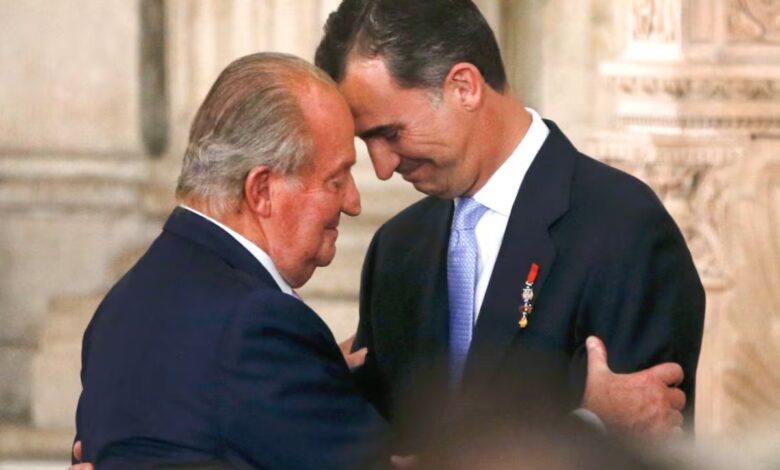
In recent decades, the monarchy has faced serious challenges. Scandals involving Juan Carlos’s personal life and financial dealings, as well as family members’ involvement in court proceedings, have called public trust in the institution into question. In 2014, Juan Carlos abdicated the throne, passing it to his son Felipe VI (Felipe VI). The new king emphasized the fight against corruption and a renewal of the dynasty’s image.
With the arrival of Felipe VI, the monarchy continued to play a significant role in the country’s social and political life. The royal family took part in major events, from national celebrations to international forums. Princess Leonor (Leonor) gradually began participating in official functions, and in 2023, she swore allegiance to the constitution.
The Monarchy Today: Challenges and the Future
In recent years, the Spanish royal family has faced new challenges. Debates about the role of the monarchy persist in the country, especially amid political crises and regional conflicts such as the situation in Cataluña. Despite this, the dynasty continues to perform its representative duties, take part in international meetings, and promote national unity.
In 2024 and 2025, King Felipe VI and his family are actively present at key events: from military parades to international summits. Princess Leonor has made her first official trip abroad, and the royal family remains a symbol of continuity and stability for millions of Spaniards.