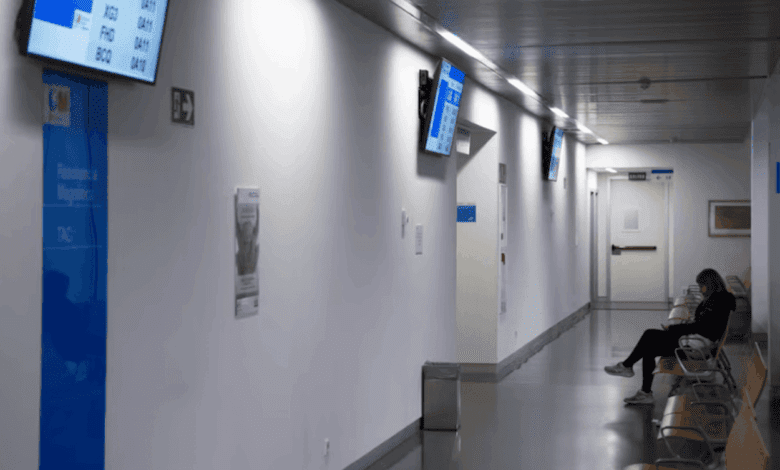
A sharp increase in flu cases has been recorded in the Spanish capital. Over the past week, infection rates in Madrid have doubled and surpassed the epidemic threshold, something that did not occur until late December last year. Amid this crisis, hospitals are now facing dire circumstances: nurse staffing levels fall short of real needs, and staff workloads have reached critical levels.
Unions claim that Madrid needs at least 13,000 more nurses to ensure the proper functioning of its healthcare system. The shortage affects every sector—from public and private clinics to elderly care facilities. According to healthcare representatives, staffing is at its bare minimum, making it impossible to guarantee even the most basic patient safety.
Systemic Crisis and Staffing Shortage
Official data shows that Madrid has the lowest number of nurses in primary healthcare across all regions of Spain. Specialized institutions face challenges as well. The Ministry of Health warns that within the coming years, Spain could be short as many as 100,000 mid-level medical professionals.
Regional authorities have pledged to increase staffing as part of the winter plan, but have yet to disclose any specific numbers. Meanwhile, unions point out that the actual staff boost is minimal — for instance, only a few dozen nurses have been added for home vaccinations in elder care facilities. Overall, the situation remains tense.
Overcrowded hospitals and staff exhaustion
In Madrid’s largest hospitals, doctors and nurses are working at their limits. Wards are short of beds, and patients are forced to wait for hours in the corridors. In some cases, wait times stretch to six or even seven hours. Medical staff admit they are exhausted, while the number of cases keeps increasing.
Doctors highlight that the lack of beds makes it impossible to isolate patients with respiratory symptoms, thus raising the risk of infection spreading. Masks alone are not enough to prevent contagion. In some hospitals, despite recent renovations, the number of nurses has not increased, and the burden on staff has only grown heavier.
Labor rights violations and mounting overtime debts
Healthcare workers complain about constant overtime and cancelled days off. In some hospitals, nurses are owed tens of thousands of hours in unpaid overtime. Some are forced to work double shifts, and scheduled vacations are cancelled without notice.
Unions emphasize that the situation has reached a boiling point. At one of Madrid’s largest clinics, the backlog of unused hours exceeds 50,000—equivalent to several weeks of work for the entire staff. Healthcare workers are demanding real action, not promises: they want new hires and better working conditions.
Authorities’ responsibility and the hope for change
Regional officials admit that the staffing shortage is a national issue, but blame central authorities for delays in accrediting foreign specialists and for the lack of a clear human resources management plan. Meanwhile, other regions, like Andalucía, have already launched large-scale recruitment programs and improved contract conditions for new nurses.
But in Madrid, the situation remains tense. The medical community insists that without urgent staff increases and a review of employment policies, the crisis will only worsen. Patients are still facing hours-long waits, while personnel suffer from constant stress and fatigue. The future of the region’s healthcare system remains uncertain.