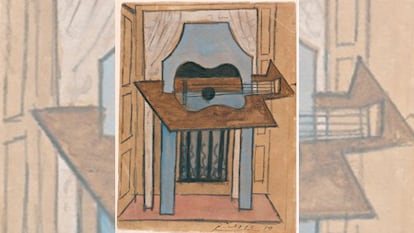
An unusual story has unfolded in the Spanish capital involving the name Pablo Picasso. Following a high-profile theft at the Louvre, where criminals broke into the museum through a window in broad daylight, one of the artist’s works unexpectedly surfaced in the most ordinary entrance hall of an apartment building on avenida de Pío XII in Madrid. The painting, long thought stolen, was in fact simply forgotten in the foyer, prompting a wave of discussion about security and attitudes toward cultural heritage.
The incident involving the transportation of artwork once again highlighted just how fragile the system for protecting such treasures truly is. It turned out that the truck transporting the canvas ‘Naturaleza muerta con guitarra’ made an overnight stop on its journey from Madrid to Granada. Upon arrival at the exhibition hall, no one bothered to check the cargo or its condition. Such negligence seems absurd, but it was precisely this that caused the masterpiece to slip out of the specialists’ view and nearly be lost forever.
Meanwhile, the Reina Sofía museum in Madrid has launched a major exhibition of Maruja Mallo, where visitors are greeted by an unusual carpet made from shells and leaves. This temporary installation, ephemeral as it may be, has become a symbol of respect for tradition and creativity. Unlike works that are forgotten or stolen, it was created precisely to disappear, but for now, it continues to delight museum guests.
Art caught between memes and scandals
In recent weeks, art has found itself in the spotlight—not just among professionals, but also with the general public. Memes, parodies, and social media debates have made the topic relevant for all ages. The reason isn’t just the big names—Louvre and Picasso—but also a string of curious, even absurd incidents involving the protection and movement of artworks.
There have been other moments when paintings became objects of protest or tools to draw attention to various issues. From soup-throwing stunts at Van Gogh’s canvases to attempts to damage works by Velázquez and Goya, all of this shows that art is still seen as a powerful symbol and a means of communication.
The fragility of heritage and society’s responsibility
The story of a forgotten Picasso in Madrid is a reminder that cultural treasures require not just protection, but careful attention at every stage of their movement. Any carelessness can lead to the loss of unique pieces that belong not only to the present generation, but also to those yet to come. Unlike temporary installations created to disappear, the masterpieces of great artists must be preserved and handed down. Yet, as practice shows, even the most famous works can end up in the most unexpected places—and this hardly seems rare anymore.