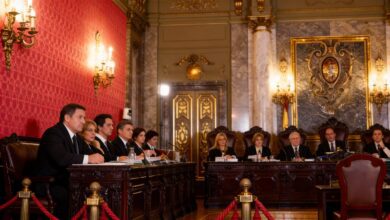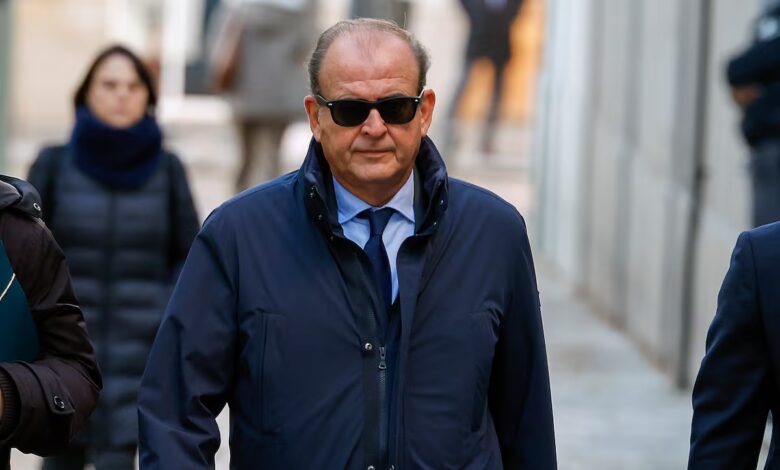
Spain’s Supreme Court became the stage for explosive statements as former Acciona construction division head Justo Vicente Pelegrini and his former subordinate Tomás Olarte Sanz categorically denied accusations of paying kickbacks to secure government contracts. During the hearing, both men stated they had no involvement in the alleged scheme tied to former Transport Minister José Luis Ábalos and ex-PSOE organizational secretary Santos Cerdán.
Judge Leopoldo Puente questioned both individuals as suspects. They are accused of possible involvement in a corruption scheme and participation in a criminal organization. At the request of the prosecution and plaintiffs, the court restricted their movements by confiscating their passports, prohibiting them from leaving the country, and requiring them to appear before the judge every two weeks.
Charges and case details
At the center of the investigation is the suspicion that Acciona paid 2% of each public contract amount to Servinabar, a Navarre-based company allegedly partially owned by Cerdán. Investigators claim these payments were not for services rendered but covert kickbacks in exchange for help securing lucrative contracts through connections with Ábalos, Cerdán, and former ministerial adviser Koldo García.
Pellegrini and Olarte insist that there were no illegal payments, and that 2% was the maximum the company could pay for occupational safety services at the sites. According to them, all payments are supported by official invoices. They claim that cooperating with Servinabar was standard practice in the construction industry, not part of a corruption scheme.
Connections and meetings
Pellegrini admitted to having a personal relationship with Servinabar owner Joseba Antxon Alonso, but said his interactions with Serdan were strictly work-related. Olarte, for his part, stated that his contacts with Alonso were purely professional and that he did not know Serdan.
The case files contain information about meetings between Pellegrini, Alonso, and Serdan, including one in Madrid in the summer of 2019. Investigators note that participants took precautionary measures: they turned off their phones and used encrypted messengers. Pellegrini explained that he only displayed documents on a screen for work discussions, not to transmit confidential information.
Court and company response
The judge noted that Pellegrini’s explanations regarding the meetings and displaying documents were unconvincing. Nevertheless, the former director maintains that all discussions were strictly business-related and concerned the Mina Muga project—the development of a potash deposit in Sangüesa, Navarra, where Acciona and Servinabar worked together.
After the publication of the Guardia Civil report and the start of the investigation, Acciona dismissed Pellegrini in June last year. The report also includes a conversation between Ábalos and Koldo García, mentioning an attempt by Serdán to arrange for people connected to Acciona to be hired by the ministry. Pellegrini has denied these allegations as well.
Further investigation
The investigation is ongoing: the judge has already questioned another Acciona employee, José García Alconchel, and is examining the details of contracts between Acciona and Servinabar. The case includes photographs of meetings which, according to Pellegrini, took place on a single day and were exclusively for discussing the Mina Muga project.
The prosecution and plaintiffs are demanding stricter precautionary measures, while the defense is requesting that the restrictions be lifted. In the coming weeks, the court will continue proceedings to determine whether corrupt practices occurred or if this amounts to standard business relations between the companies.