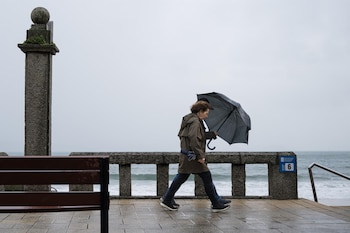
Galicia hit by Storm Ingrid with hurricane-force winds, snow, and giant waves, authorities declare highest alert level
Areas like Costa da Morte, Rías Baixas, and A Mariña lucense bore the brunt of the storm, with waves reaching nine meters and wind speeds surpassing 140 km/h in some locations. In Cedeira, Burela, and Viveiro, gusts were recorded at 149, 137, and 132 km/h respectively. In Vimianzo and Arteixo, the wind did not drop below 110 km/h. For locals, it became a true test of resilience.
Transport and schools
Galician airports were among the first casualties. Flights in A Coruña were canceled or delayed, including an Air Europa flight from Madrid. Domestic flights between Santiago de Compostela and Vigo were also suspended due to persistent winds. The region’s roads became treacherous: traffic was limited or completely blocked on many sections, especially for trucks and heavy vehicles.
Educational institutions were not left out. Authorities decided to suspend classes and cancel school transport in the province of Ourense, as well as in the southern and central areas of Lugo and the inland regions of Pontevedra. All outdoor events were canceled in areas under a red alert. This affected not only major cities, but also small municipalities where snow and ice made the roads impassable.
Marine threat
The sea has become a real enemy for coastal areas in recent days. A red alert was declared across much of the Galician coastline. Waves reaching nine meters high not only damaged infrastructure, but also posed a deadly threat to fishermen and residents of coastal villages. Authorities strongly advised people to stay indoors unless absolutely necessary and to avoid walking along the shore entirely.
Rescue services worked around the clock, responding to numerous emergency calls. In some locations, residents had to be evacuated due to the risk of flooding. The rough sea did not calm even at night, and strong winds scattered debris and garbage through the streets. For many Galicians, these days became a true test of endurance and patience.
Snow trap
The cold snap brought not only strong winds but also heavy snowfall. In the mountain regions of Lugo and Ourense, the snow cover reached twenty centimeters, with temperatures dropping to one degree. Meteorologists predicted further drops in temperature in the coming hours, and snow levels could fall to 400 meters above sea level. Around fifty municipalities were snowed in, and municipal services struggled to keep roads clear.
Traffic police imposed strict restrictions on trucks over 7.5 tons on key highways in the northwest. Drivers of passenger vehicles were advised to avoid long trips, especially on Friday evening when the bad weather was expected to peak. Some sections introduced automatic detours and lowered speed limits. In case of worsening conditions, full road closures were planned.
Response and consequences
Local authorities openly expressed concern, saying that Galicia had not seen such a destructive weather event all winter. Meteorological service representatives called Ingrid the most dangerous storm of the season. Despite a gradual easing of the storm by the weekend, warnings remained: snow, wind, and waves continued to threaten residents’ safety.
Authorities urged residents to remain vigilant and avoid unnecessary risks. These days, Galicia has shown just how vulnerable a region can be in the face of nature. The storm spared neither cities nor villages, neither roads nor the sea. And although improved weather was forecast, the aftermath of this storm will linger for a long time.