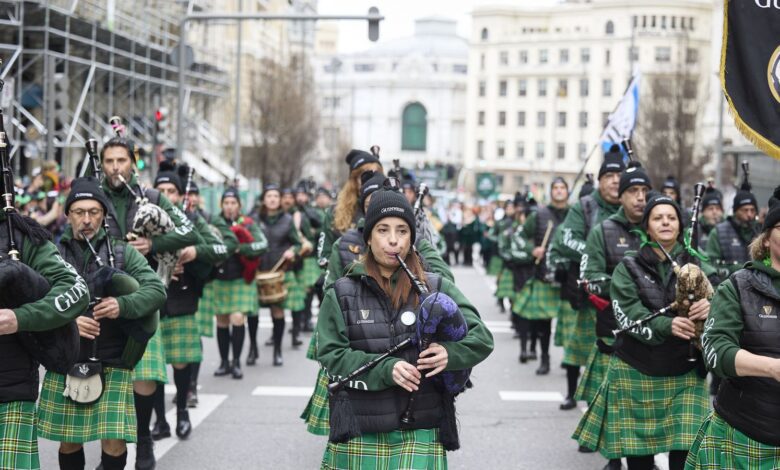
This year, Madrid is preparing for an event that will noticeably change the usual rhythm of the city center. On Saturday, Gran Vía will host the largest St. Patrick’s Day parade in the capital’s history. For residents and visitors, this means not only a vibrant spectacle but also major changes to traffic, as well as new opportunities to experience Celtic culture.
Organizers promise that the parade will start at 5:00 p.m. and last for more than two hours. The route will stretch from the Metrópolis building to Plaza de España. During this time, the street will become a stage for more than 40 music and dance groups, featuring both Spanish and international performers. Of particular interest is the participation of St. Laurence O’Toole Pipe Band—one of the world’s most renowned pipe ensembles. Their performance will be the centerpiece of the celebration. Joining them on the Gran Vía will be Irish dancers, traditional musicians, and street performers.
Music and tradition
The parade promises to be more than just a procession; it will be a true street festival. According to russpain.com, more than 700 pipers and about 1,200 performers are expected to participate. These will include groups from Galicia, Asturias, Aragón, and Madrid, as well as guest performers from other countries. The sounds of bagpipes, drums, and tambourines will accompany the audience along the entire route, creating the atmosphere of an authentic Celtic celebration.
The celebration will not be limited to the parade. At noon, musical performances are scheduled for Callao Square, and in the evening, the same venue will host a large concert. On Sunday, organizers invite everyone to join a céilí—a traditional Irish group dance where music and choreography bring together people of all ages.
Restrictions and safety measures
An event of this scale requires special arrangements. From 15:30 to 19:30, traffic on Gran Vía, as well as on Princesa and Cuesta de San Vicente streets, will be restricted. Temporary no-entry zones will also be introduced in neighboring areas. Additional municipal police forces and traffic control services will be deployed to ensure order and safety. These measures are expected to prevent traffic congestion and provide a comfortable experience for festival-goers.
The celebration is part of Irish Week in Madrid, supported by Tourism Ireland and the Irish embassy. For several days, the city hosts themed concerts, cultural events, and workshops dedicated to the island’s traditions. This format not only introduces Irish culture, but also fosters cultural exchange between Spain and Ireland.
A festival on a new scale
San Patricio, considered the patron saint of Ireland since the 5th century, has long been celebrated beyond his homeland. In recent years, his day has been marked in many countries, and Madrid is no exception. What was once limited to themed parties in pubs has grown into a large-scale city event that brings together thousands of participants and spectators. For several hours, the color green, bagpipes, and Irish dancing become symbols of the capital.
In recent years, Madrid has increasingly become a venue for major international festivals and parades. For example, last year the city hosted a large-scale carnival featuring groups from Latin America, and in the summer, there was a street music festival that brought together artists from across Europe. These events not only enliven the city but also boost tourism and strengthen cultural ties. The San Patricio parade is further proof that Madrid is continuing to embrace new traditions and holiday formats.