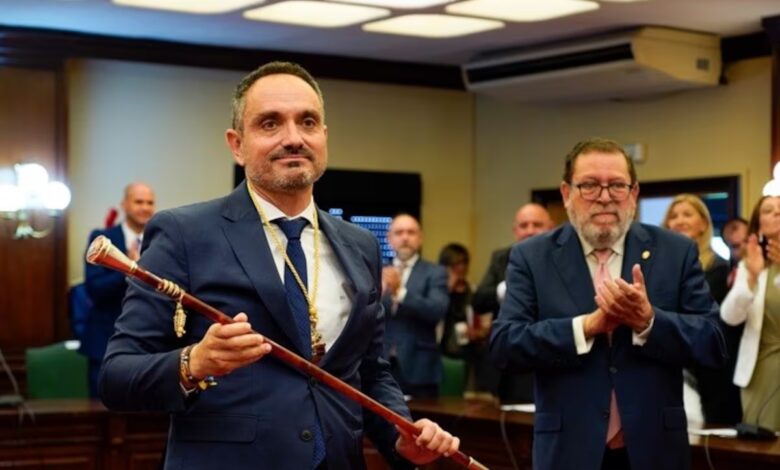
The developments in Móstoles have taken on particular significance for the region’s residents: a political crisis in one of the largest cities of the autonomous community could affect the balance of power in Madrid and even the future of coalition agreements in other municipalities. Following serious allegations of sexual and workplace harassment against Mayor Manuel Bautista, the Vox party officially dissolved its coalition with the Partido Popular (PP) and demanded the immediate resignation of the mayor. This move marked an unexpected twist in local politics, where the partnership between the two parties had until recently been considered strong and strategically important.
Móstoles, the region’s second most populous city with over 214,000 residents, was one of the key spoils for Isabel Díaz Ayuso’s team after the 2023 elections. At that time, the PP managed to regain control of the city, but only with the support of Vox. Manuel Bautista, who previously had little political influence in Móstoles, took the mayor’s office thanks to this alliance. However, behind the appearance of unity, internal tensions were brewing, eventually leading to a public split.
Internal conflict
The crisis began with the departure of Daniel Martín, one of the three Vox representatives on the city council. After the elections, the PP fell just two seats short of an absolute majority, and it was thanks to an agreement with Vox that the party gained the opportunity to run the city. Martín headed the culture department, but left the party as early as January, citing disagreement with its policies and accusing colleagues of prioritizing personal publicity over real change for the city.
At one of the council meetings, Martín sharply criticized his former allies, calling Vox a tool for imposing ideological ideas and reproaching them for the lack of internal democracy. His departure provoked a strong reaction: Vox representatives demanded that the PP immediately remove Martín from his post and hand the portfolio to the next candidate on the list. The People’s Party promised to meet this demand, but only after the completion of a series of important events.
Escalation of tensions
The situation escalated when Vox accused Mayor Bautista of supporting the defector and weakening the party’s position. The former alliance, once seen as a model for the region, began to unravel. According to Nieva Machín, the Vox leader in Móstoles, keeping Martín in the government effectively meant breaking up the coalition. Even after the PP dismissed Martín, questions about the future management of culture remained unresolved.
The announcement of Martín’s dismissal was made at a joint press conference with Alfonso Serrano, one of Ayuso’s key allies who, according to the opposition, was involved in concealing the accusations against the mayor. At that moment, an open exchange of accusations began between the former allies, each attempting to seize the initiative and control the situation.
A sharp break
The final rupture came after the publication of an Instagram video in which Machín, together with Vox leadership in Madrid and representatives of the regional parliament, officially announced her departure from the coalition. She promised that Vox would become the toughest opposition in the city’s history, and called Bautista a man unworthy of trust. Other opposition forces joined the demand for the mayor’s resignation, insisting on an extraordinary city council session to publicly address the harassment allegations.
According to regulations, if more than a quarter of the deputies request an extraordinary session, the mayor is obliged to convene it within 15 working days. This time, the request was submitted on February 5, and now the entire city is focused on the upcoming session, where Bautista will have to answer the most pressing questions.
The mayor’s response
On Friday, Bautista issued a statement rejecting all accusations, describing the situation as an attempt to discredit him and a political campaign against him. He also threatened to take legal action in response to the dissemination of information about the alleged harassment. Meanwhile, the power struggle in Móstoles continues, with local residents watching closely as developments could reshape the political landscape not only of the municipality but of the entire region.
Recalling recent events in other regions, it is worth noting that similar political crises involving calls for resignations and mass protests have become increasingly common in Spain. For instance, in Catalonia, following transport gridlock and a railway accident, the opposition also demanded a change in leadership and emergency meetings. For more on how such scandals affect regional politics, see our coverage of the transport crisis in Catalonia, where calls for resignations and pressure on the authorities became the central topics of public debate.
In recent years, Spain has seen a rise in cases where internal coalition conflicts lead to high-profile splits and shifts in political alliances. A surge in allegations of harassment and corruption, along with public calls for resignations, is becoming increasingly common at all levels of government. These situations not only destabilize the functioning of municipalities but also reflect a broader trend of rising political tension across the country. As a result, even small towns find themselves in the national spotlight, and decisions made by local authorities can have repercussions far beyond their jurisdictions.