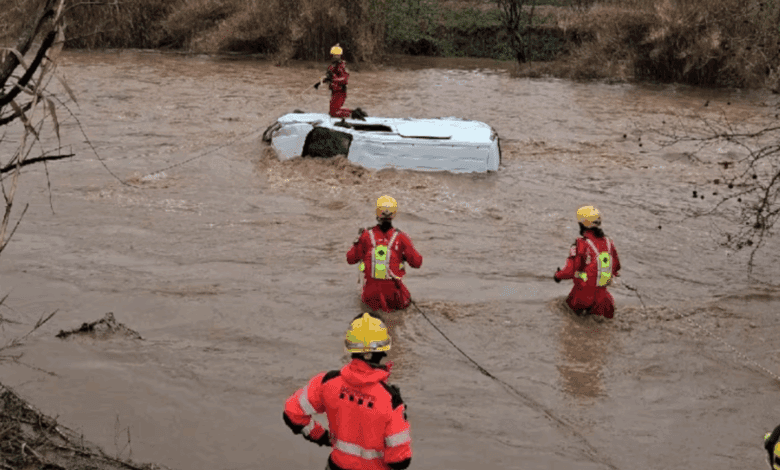
Natural disasters in Catalonia have once again reminded residents of their danger: after heavy rains caused by cyclone Regina, the body of a man who went missing on Friday was found in Llinars del Vallès (Barcelona province). The incident has become a wake-up call for the region, where water levels in rivers and reservoirs have risen sharply in recent days. According to El Pais, the search lasted two days before rescuers discovered the deceased in the Mogent riverbed.
The man, a 69-year-old resident of Mollet del Vallès, became trapped in his car when a sudden surge of water swept it away. Before disappearing, he managed to call relatives and ask for help, but contact was soon lost. His car was found about a kilometer and a half from the site of the incident, but he was not inside. Only after two days was his body recovered from the river, confirming the worst fears of both rescuers and his family.
Floods and their consequences
The aftermath of cyclone Regina has been severe: in some areas of Catalonia, more than 250 liters of rainfall per square meter have been recorded. This led to a sharp rise in water levels in the rivers of Girona, where the Ter and Muga reached dangerous marks. In Sant Joan de les Abadesses, for example, morning measurements showed a flow rate of 85 cubic meters per second, posing a threat to nearby populated areas.
Reservoirs that were nearly empty just a year ago are now being forced to release water urgently. In Susqueda, water levels have exceeded 100% of capacity, and the water release has increased the flow in the Ter River to 208 cubic meters per second. A state of high alert has been declared in La Cellera de Ter. In Barcelona, the Foix reservoir has also begun releasing water to prevent overflow, and local authorities have urged residents to exercise caution.
Risks for the population
The Catalan Water Agency (ACA) has warned of the need to follow safety measures, especially for residents living downstream from the reservoirs. In some areas, such as Baix Ebre, Ribera d’Ebre, and Montsià, sudden floods are possible due to ongoing rainfall. According to El Pais, the situation remains tense, with authorities continuously monitoring the state of rivers and dams.
The sudden surge of water in the region has tested emergency services, which have been working around the clock to search for missing persons and to maintain infrastructure control. Support services and local residents have joined forces to minimize damage and prevent further tragedies. Despite all efforts, nature has once again demonstrated its unpredictability and power.
Context and similar cases
In recent years, Catalonia has faced a series of extreme weather events. In 2023, similar downpours led to flooding in Girona and the evacuation of several villages. At that time, river levels also exceeded historic highs, and rescue operations continued for several days. In 2024, heavy rains in the province of Tarragona damaged roads and bridges, leaving several families temporarily without shelter. Such events underline the need for constant monitoring of hydraulic structures and prompt public risk alerts. The Catalan authorities continue to invest in early warning systems and the reinforcement of dikes to minimize the impact of future floods.