The suspension of high-speed rail service between Málaga and Antequera has come as an unexpected blow to thousands of passengers and the region’s transport system. The incident occurred at a time when many residents and visitors to Andalusia were relying on the smooth operation of the infrastructure. The consequences are already being felt: travel plans have been disrupted, delays have increased, and transport companies have been forced to urgently adjust schedules.
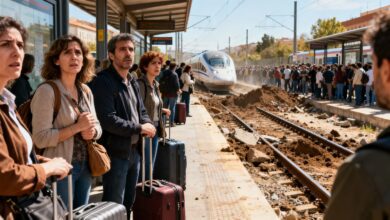
On Wednesday morning, a landslide in the municipality of Álora completely blocked train traffic on one of the key segments of the high-speed line. Emergency crews were immediately dispatched to the site to assess the extent of the damage and begin clearing the tracks. Response teams are working under tight deadlines, as restoring service is critical for the region.
Causes and consequences
The landslide was triggered by adverse weather conditions witnessed in Andalusia over recent days. Heavy rainfall and unstable soil in the Álora area led to earth sliding onto the railway tracks. This has not only disrupted service between Málaga and Antequera, but also affected the Antequera Santa Ana–Granada route, where trains are likewise halted due to abnormal weather between Bifurcación Tocón and Loja.
Passengers who were en route faced delays and had to seek alternative routes. Railway companies were forced to inform customers about the situation and offer options for transferring to buses or other means of transportation. For many local residents, this incident became a reminder of how vulnerable the transport system is in the face of natural disasters.
Emergency services response
Immediately after the incident was reported, all necessary resources were mobilized to eliminate the consequences of the landslide. Specialists are assessing the condition of the tracks, inspecting the power supply systems, and drawing up a plan for the quickest possible restoration of traffic. Authorities emphasize that passenger safety remains a priority, and train service will only resume after a full inspection of the infrastructure.
At the same time, transport companies and local management are coordinating their actions to minimize inconvenience for the public. In some cases, temporary bus routes have been organized to help passengers reach their destinations. However, despite all efforts, restoring the normal schedule may take longer than usual.
Context and similar cases
Such incidents involving landslides and disruptions to rail service are not uncommon in Spain, especially during periods of heavy rain and unstable weather. In recent years, the country’s infrastructure has faced challenges linked to climate change and the growing number of extreme weather events. Each of these situations tests the emergency response services and the resilience of the entire transportation system.
Looking back at recent events, it’s notable that similar disruptions in railway traffic have already occurred in other regions of the country. For example, in Catalonia and northern Spain, rail lines have repeatedly been blocked due to landslides and flooding. These situations always cause temporary difficulties for passengers and require a swift response from everyone involved in the transportation process.
In a previous report, our editorial team covered the transport collapse in Barcelona, when Rodalies trains suddenly stopped, creating chaos among passengers. At that time, authorities were forced to urgently boost bus routes to handle the influx of people. For more details on how the situation unfolded in the Catalan capital, read the article Passengers in shock: chaos on Barcelona’s railways continues.