An incident on the border between Murcia and Alicante has once again raised concerns about how administrative disagreements between autonomous communities can cost lives. Spaniards are worried: if emergency aid is delayed due to bureaucracy, no one is safe from such tragedies. This story has sparked discussions about the efficiency of the 112 emergency services and the need to change response protocols.
A Chronicle of Tragedy
Antonio Morales, a 73-year-old retiree and former firefighter, set out for his usual morning bike ride. At a spot where the road crosses the border between Murcia and the province of Alicante, he lost control, hit a pothole, and fell, striking a post. The accident happened at around 10 a.m.
A witness to the accident immediately called 112 but encountered an unexpected problem: the operator insisted on clarifying the exact autonomous community of the incident location. The woman explained she was literally on the border and asked for the nearest team from Beniel, just a few minutes away by car. However, the call was redirected to the 112 service of the Valencian Community, and help was dispatched from Orihuela, nearly 20 kilometers away.
Lost Time
The victim’s son, Antonio Morales Ayala, can barely contain his outrage as he recalls how precious minutes were wasted over jurisdictional disputes. According to him, emergency responders seemed more concerned with confirming the location than assessing the victim’s condition. As a result, the ambulance arrived only 36 minutes after the call, by which time Antonio was still conscious but already in severe pain and struggling to breathe.
He was taken to Orihuela hospital another half hour later. By then, the man was unconscious, and shortly afterwards he died. The family is demanding surveillance footage to determine how long he was left without medical attention in the hospital corridors, since the time of death recorded on the certificate is much later than his actual arrival.
Administrative barriers
Official documents from the police and medical services confirm: the accident site was within Murcia’s territory, not Alicante. Despite this, due to an operator’s mistake and strict protocol adherence, the call was forwarded to the neighboring region. Protocols for the 112 service require that each agency operates only within its own autonomous region, even if the nearest help is literally just across the road.
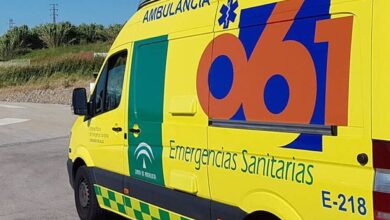
The family of the deceased claims that if not for bureaucratic delays, Antonio could have received help faster and perhaps survived. Moreover, the ambulance that arrived was not equipped for emergency medical care—it lacked both a doctor and the necessary life-support equipment.
A chain of errors
The investigation revealed that during the call to 112 in Murcia, two notifications were automatically generated for the regional 061 service, which were seen by duty doctors. However, since the call was transferred to the Valencian Community, local doctors did not receive permission to go out and did not intervene. As a result, the victim was left without qualified assistance at the scene and on the way to the hospital.
The victim’s son calls what happened a “chain of errors and negligence,” emphasizing that his father did not die instantly and could have survived if the services had responded in time. He compares the situation to an accident happening in the middle of the ocean—the man was left that helpless on the border between two regions.
Similar tragedies
In Spain, there have been repeated debates over how territorial disputes between autonomous communities affect the speed and quality of emergency response. Recently, a similar case occurred in Andalusia, where a police officer died after responding to flooding, sparking wide public outcry. You can read more about how the tragedy in Andalusia shook the region in our report about the death of a police officer after the flood.
Experts note that such incidents reveal vulnerabilities in the coordination system between regions. The need to review protocols and introduce more flexible solutions is being discussed at the government and ministry levels. In recent years, Spain has seen other incidents where bureaucratic barriers hindered emergency services’ response, leading to tragic outcomes. Public pressure and media coverage often act as catalysts for change, but the issue remains unresolved.