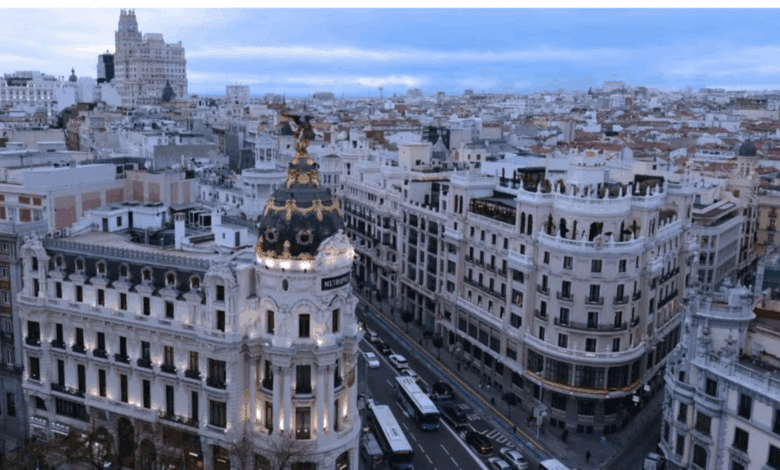
Madrid is a city that never stands still. There’s always construction, renovation, or rebuilding underway. For locals and visitors alike, the sound of construction has become the backdrop of daily life. Yet few stop to consider the lives and ideas behind this constant activity—people whose ambitions and visions have shaped the city’s identity over centuries. Over twelve centuries, Madrid has undergone countless transformations, and each era has left its mark thanks to architects, engineers, and even ordinary residents.
A new book dedicated to these heroes gathers the names of those who shaped the architectural style and structure of the capital. Among them are both celebrated masters and those whose contributions long remained in the shadows. Their projects, ideas, and even personal dramas are woven into the history of a city that continues to surprise with its diversity.
The First Builders
One of the earliest known masters was maestre Haçan, who after converting to Christianity became known as Gonzalo Fernández. At the end of the 15th century, he oversaw the construction of important landmarks, including the Concepción de Nuestra Señora hospital, later known as the La Latina hospital. This hospital was founded by Beatriz Galindo, tutor to Queen Isabella. Though the original building has not survived, its facade can still be seen opposite the School of Architecture in the University City.
Maestro Hasan was also responsible for renovating buildings in what is now Plaza de la Villa, the site of the city’s new butcher shops at the time. His contribution to Madrid’s development is regarded as one of the earliest examples of integrating Muslim and Christian traditions in the city’s architecture.
An Era of Change
In the 19th century, Francisco Jareño y Alarcón, a native of Albacete, emerged on the scene. His career began during a time when Spanish architecture was transitioning from Neoclassicism to Historicism. Four years in Italy shaped his perspective on new building technologies. He later traveled to Germany and France, drawing inspiration there for his future projects.
In Madrid, Jareño designed the Biblioteca Nacional on paseo de Recoletos. He was also involved in the restoration of the city’s oldest civic building, the Torre y Casa de Los Lujanes on Plaza de la Villa, including its façade. His other works included the renovation of the Instituto de San Isidro and the construction of the Tribunal de Cuentas building on Fuencarral Street.
City of the Future
In the late 19th and early 20th centuries, ideas about urban development were shifting. Arturo Soria y Mata proposed the concept of a linear city, where every family could live in their own house with a garden and vegetable plot. His project challenged the traditional radial design and aimed to unite urban and rural life. In the area that now bears his name, he built thousands of homes, but the entire plan could not be realized due to political and economic upheavals.
Soria dreamed of a 50-kilometer railway line connecting different parts of the city, but the civil war and subsequent events prevented the project from being completed. Nevertheless, his ideas influenced Madrid’s further development and remain relevant to modern urban planners.
Planning and power
In the mid-20th century, Madrid lay in ruins after the civil war. Architect Pedro Bidagor faced the challenge not only of rebuilding the city, but also of creating a new structure that reflected the ideals of the regime. He proposed dividing the capital into concentric zones: from the political center to the industrial outskirts, with clear distinctions between social classes.
Bidagor advocated for the construction of wide avenues and the creation of new transport routes to connect different areas of the city. His plan included three main entrances to Madrid, but these projects were never carried out. Nevertheless, his approach to urban planning had a significant impact on the development of the capital’s transportation and residential infrastructure.
A Woman’s Legacy
A special place in history belongs to Matilde Ucelay Maórtua — the first female architect in Spain. Born into a family of intellectuals, she showed an interest in the sciences and arts from an early age. In 1931, she enrolled in Madrid’s architecture school, where she encountered bias from her teachers. Despite these challenges, she graduated in 1936, but political circumstances prevented her from practicing her profession for many years.
After her rights were restored, Ucelay led private projects, including houses in the Puerta de Hierro district, as well as work for international clients and industrial buildings. Many of her works have not survived, but Matilde’s name has become a symbol of breaking barriers for women in the profession.
Building the City with Your Own Hands
Not only renowned architects have shaped Madrid’s appearance. In the 1950s and 60s, in the Pozo del Tío Raimundo neighborhood on the outskirts of the city, entire blocks were built by the residents themselves. People who came to the capital in search of work bought small plots and constructed homes from whatever materials they could find—brick, wood, and sheet metal. There was no sewage system or electricity; after rain, the streets turned to mud, and amenities were limited to a bucket in the corner of the room.
When the authorities tried to seize the land to build a new transport interchange, the residents defended their homes and secured relocation to modern apartments in the same area. This episode became an example of how ordinary people can influence the development of a city and protect their interests.