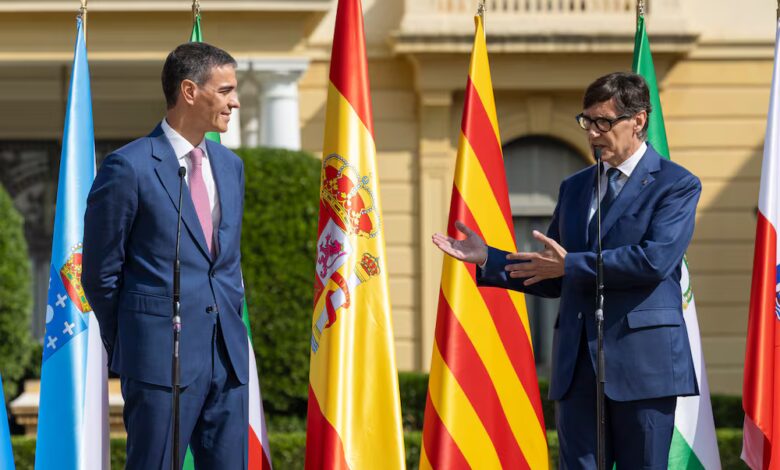
In August 2024, it seemed that the political puzzle had finally been solved: the Socialists were in power in both Madrid and Barcelona, and after years of tension, Catalonia was returning to normalcy. Pedro Sánchez had secured support from his Catalan colleagues, and Salvador Illa became the symbol of a new chapter. However, a year and a half later, optimism has given way to disappointment — neither Sánchez nor Illa has an approved budget, and talk of a ‘political conflict’ is once again surfacing in interviews with the president.
Junts, Carles Puigdemont’s party, is open about its dissatisfaction. Míriam Nogueras, one of Junts’ key figures in Madrid, stated bluntly: nothing has changed, the positions remain the same. Sánchez, acknowledging what he once denied, has put Junts back in the spotlight, hinting at Puigdemont’s possible return to major politics.
A double game
While the Junts leader remains outside Spain and the party itself is in opposition in Catalonia, it is irritated by the role of ‘lifesavers’ for Sánchez. Talks in Switzerland continue with an international mediator on the Catalan issue, while Sánchez and Illa travel the country declaring the defeat of the independence movement. For the first time in 44 years, separatists have lost their majority in the Catalan parliament, yet this hasn’t stopped Sánchez from reverting to conflict rhetoric, contradicting Illa’s triumphant statements about Catalonia’s return to Spanish politics.
The complexity of the situation is intensified by the fact that Junts supports the government in Madrid but opposes the Socialists in Catalonia. Despite this, Illa remains Sánchez’s main ally within the party. He was the one who met with Puigdemont in Brussels at the start of the political season to help facilitate the government’s work. He also came to Sánchez’s aid in June when the scandal erupted around Santos Cerdán.
Financial deadlock
Sánchez remains a key figure for the Socialists in Catalonia, while Illa tries to balance the interests of different sides. In the coming months, they face a new challenge: Finance Minister María Jesús Montero is preparing a draft reform of regional financing. The special financing status, for which the PSC secured ERC votes and left Junts in opposition, has yet to be implemented. The approval of Catalonia’s budget, eagerly awaited by ERC, depends on it.
Within the PSOE, some believe the national budget is overrated, since European funds have provided the necessary financial cushion. But Illa can’t rely on temporary solutions forever—without a budget of his own, his political project won’t be able to take hold.
The Catalan factor
This entire situation once again places the Catalan issue at the center of Spanish politics. Despite attempts to normalize relations, old tensions persist. Junts continues to press its demands, while the Socialists are forced to seek compromises to maintain a fragile balance. Ahead lie new negotiations, further challenges, and possibly unexpected twists in the relationship between Madrid and Barcelona.