In the autumn of 1975, Spain stood on the threshold of changes that had seemed impossible just a year before. Tension filled the air: the country held its breath, waiting for the end of the Franco era. Champagne bottles gathered dust in refrigerators, while endless medical updates on the dictator’s health played on the radio. Time felt frozen, and no one knew when a new day would finally dawn.
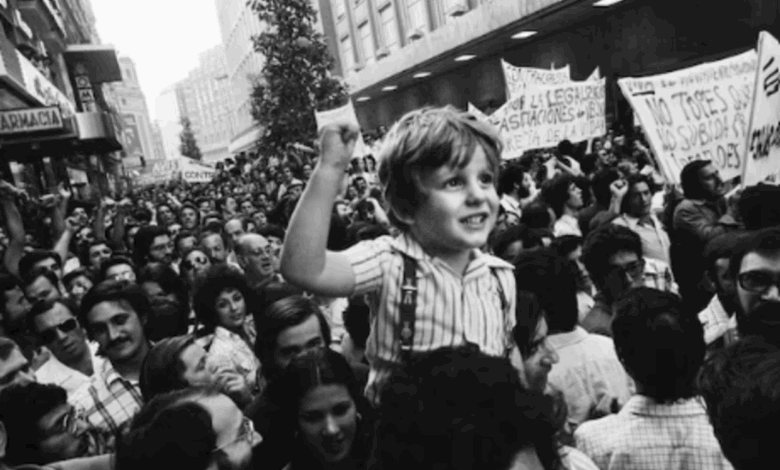
Yet behind this outward calm, a storm was brewing. In recent years, a wave of discontent had swept through working-class neighborhoods, universities, schools, and even professional associations. Since 1962, when miners’ strikes began in Asturias, protests had only grown stronger. Police tried to contain the rising movement, but each month made that task harder. People took to the streets despite the threat of repression, and underground organizations along with new labor unions were gathering momentum.
An explosion of hope and new ideas
Unlike Paris in 1968, where change boiled over in the squares and universities, in Spain transformation was taking shape quietly. But this calm was deceiving. Within society, a determination was growing to break with the past and build something completely different. Workers, students, teachers, and even doctors began to discuss what the country’s future should look like. Manifestos, reform proposals, and ideas for a new education system emerged. In Madrid, Barcelona, and Valencia, professional communities came up with their own visions for Spain’s development.
All this took place against the backdrop of a harsh dictatorship that tried to maintain control even in its final months. In September 1975, eight people were executed—a last desperate attempt to hold on to power. But even such measures could not stop the rising tide of change. People were ready to make sacrifices for freedom and a better life.
Turning point: the role of society
Ordinary Spaniards—workers, teachers, residents of urban outskirts—played the most crucial part in these events. It was their efforts and mass participation that made the collapse of the old system possible. Not political deals, but pressure from below forced the authorities to give way. Business as usual became impossible amid constant strikes and a lack of dialogue with the new trade unions. The system was falling apart at the seams despite resistance from conservatives.
During this period, society was gripped by an atmosphere of anticipation and hope. Some dreamed of a revolution like those in the Soviet Union or China, others wished for Scandinavian-style socialism. There were also those who believed in democracy or a republic. The monarchy seemed outdated, but no one could say for sure what tomorrow would bring. The key was the belief that change was possible.
After the dictatorship: a return to life
When Franco left, the country erupted with joy. A real ‘fiesta’ began—people celebrated freedom, discussed new projects, and made plans. But change didn’t come overnight. It was only in the summer of 1976, with the arrival of Adolfo Suárez, that real reforms began. The following years were a time of openness, the lifting of restrictions, and the emergence of new freedoms.
Gradually, passions subsided and people returned to their daily lives. Politics became the business of parties, not the streets. Yet the memory of those times remains. Every time someone criticizes modern Spain, it’s impossible not to recall how much was achieved by those who dared to dream and fight. Spain was changed forever—and became a country people want to live in.