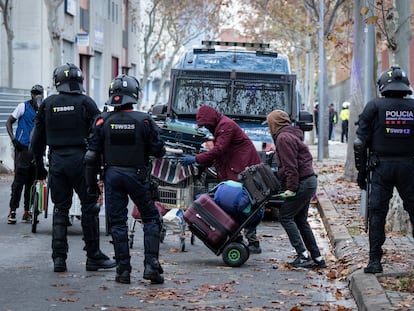
In Badalona, dozens of migrants are sleeping on the streets after being forced out of the former B9 institute building. The eviction operation, carried out on Wednesday, was touted by Mayor Xavier García Albiol as the fulfillment of his campaign promises. However, for those left homeless, the night was spent in tents set up directly across from the closed building, without any assistance from city services.
For two years, the institute had served as a refuge for more than four hundred migrants, mostly from sub-Saharan Africa. It was the largest informal migrant settlement in Catalonia. After the eviction, some people scattered across the streets, while about a hundred stayed in a tent camp on plaza Roja, spending their first night outdoors. “No one came, we don’t know what will happen next,” says Ibrahim from Nigeria, who had been living in B9 in recent weeks.
Authorities’ response
The mayor of Badalona publicly stated that the city had met its obligations and that the eviction was necessary to address safety concerns and maintain public order. According to him, only 16–17 people were provided with temporary accommodation, while another 50 were registered by social services but offered no concrete help. The rest were left without any support.
The government delegate in Catalonia, Carlos Prieto, strongly criticized the municipality’s actions, accusing the mayor of refusing to carry out his duties in providing initial assistance to migrants. He stressed that it is the responsibility of local authorities to organize first aid, and if resources are lacking, to turn to higher levels of administration. In the case of B9, he said, this did not happen.
The administration’s position
Prieto noted that all other authorities—ranging from the police to the government of Catalonia and central bodies—acted within their powers and ensured the court’s decision was upheld. The only exception, in his view, was the Badalona municipality, which failed to mobilize the necessary resources to support people left on the street.
He also explained that the state can only intervene directly if any of those evicted are official applicants for international protection. In this case, there were none. The question of whether the municipality can be legally compelled to provide assistance remains open, as state lawyers are analyzing the situation for possible legal violations.
Volunteer assistance
While city authorities remain inactive, volunteers have stepped in to help. On Thursday morning, they set up a support station in Plaça d’en Roig, distributing food and tents collected through donations. Representatives of the Catalonia Socialist Housing Union note that the situation is critical and demands an immediate solution. However, hopes for a prompt government response are slim: according to activists, during a meeting with social services the day before, they were told directly that no assistance would be provided.
The fate of hundreds who have lost their only shelter remains uncertain. Tensions are rising in the city, and the question of who should bear responsibility for the initial support of migrants is becoming increasingly urgent.