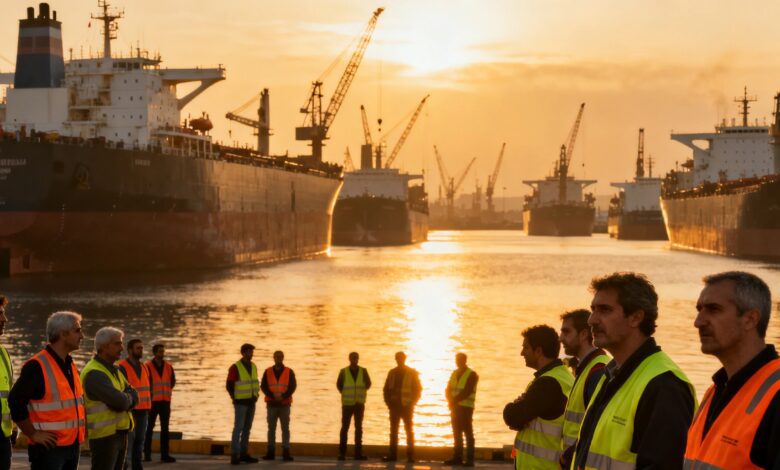
The situation on the global energy market directly affects Spain’s interests. The blockage of the Strait of Hormuz and disruptions in oil and gas supplies are already impacting fuel costs, inflation, and growth prospects. For Spanish companies and households, this means new expenses and uncertainty, while for the government it signals an urgent need for action.
The global crisis and its scale
According to the International Energy Agency (IEA), the current supply crisis is more severe than any previous energy shocks in recent decades. Losses in oil and gas are greater than during the oil shocks of the 1970s and even after the reduction of Russian gas due to the conflict in Ukraine. As a result, not only the fuel market is affected but also related sectors such as fertilizer production, the chemical industry, and logistics.
Developing countries in Asia, such as India, Pakistan, and Bangladesh, as well as states in Africa and Latin America dependent on energy imports, are particularly vulnerable. Europe, including Spain, also faces pressure: rising energy prices impact industry, transportation, and agriculture. In Middle Eastern countries, where economies rely on oil and gas exports, the consequences could be even more severe.
Government response and risks for Spain
At the onset of the crisis, many governments underestimated its scale. Only after the release of specific data and forecasts by the IEA did it become clear that the situation called for urgent measures. Experts recall the experience of the 1970s and warn: if the Strait of Hormuz remains closed, recession and debt issues could even affect developed economies.
In Spain, scenarios of possible fuel shortages for industry and transport are already being discussed. Although large-scale rationing across EU countries is unlikely for now, a prolonged blockade of Hormuz could change this outlook. According to RUSSPAIN, in the event of a protracted crisis, the most vulnerable will be energy-intensive enterprises and regions dependent on imports.
Recovery and long-term change
Even if Hormuz is unblocked soon, the impact on energy infrastructure will persist. Over 70 facilities in the region were damaged, a third of them seriously. Restoration will take months, possibly years, which means the market will not return to previous conditions quickly. Supply security risks will remain, and confidence in the region’s stability will be undermined.
In this context, countries are speeding up diversification of energy sources. Investments in renewables—solar and wind energy—are expected to grow, along with development of electric vehicles and nuclear power. The IEA notes that these areas will be key to reducing dependence on imports and strengthening economic resilience.
Emergency measures and reserves
To stabilize the situation, the IEA initiated the largest release of strategic oil reserves in history—400 million barrels. This temporarily reduced prices but did not completely solve the problem. The agency still holds 80% of reserves, which can be used if necessary. However, experts emphasize that such measures only mitigate the consequences and do not address the root of the crisis.
In Spain, additional steps are being discussed to support the most affected sectors and protect consumers from price fluctuations. Authorities are analyzing the experience of other countries and preparing plans in case the situation worsens further. It’s important to note that similar crises have already impacted the country’s economy: Spain’s economic growth in recent years continued despite external shocks, but new challenges require a reassessment of strategies.
In recent years, energy crises have repeatedly led to rising prices and supply disruptions in Europe. For example, after Russia reduced gas supplies in 2022–2023, many EU countries accelerated their transition to alternative energy sources and revised their reserves. In 2024, disruptions in LNG supplies due to strikes in Australia also triggered market concerns. These events showed that the resilience of the energy system depends not only on external factors but also on preparedness for rapid change and diversification of suppliers.