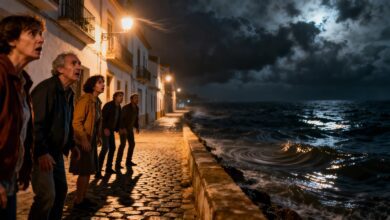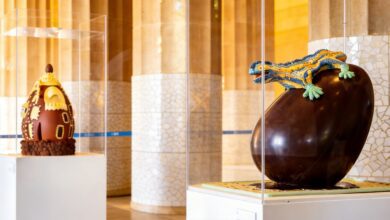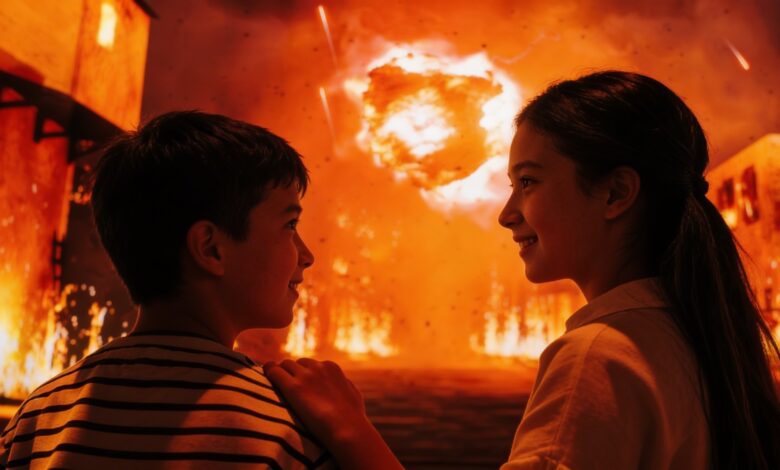
An unusual exhibition dedicated to the last days of Pompeii has opened in Barcelona, attracting the attention of local residents. The exhibition covers more than two thousand square meters at the Palau Victòria Eugènia on Montjuïc, which has temporarily become the new home for Espai Ideal. Organizers have focused on cutting-edge technology to showcase not only the disaster, but also the everyday life of the ancient city—an approach that could change how many Spaniards perceive history.
Visitors find themselves at the heart of the action right away: virtual reality transports them to the amphitheater arena, where they witness scenes with gladiators, chariots, and even a tiger. From there, the space quickly fills with water to set the stage for a naval battle—a naumachia—that guests can observe as if from beneath the surface. This immersive approach invites visitors not just to view exhibits, but to relive moments that once changed the city’s fate.
Technology and atmosphere
The exhibition blends original Roman artifacts, replicas of the famous plaster casts of the eruption’s victims, and interactive photo zones powered by artificial intelligence. Guests can try on the personas of Pompeii’s inhabitants, leave their own graffiti on special boards, or see themselves as ancient Roman citizens. Special attention has been given to details: one area features Latin inscriptions, while the overall atmosphere is enhanced with soundscapes and visual effects.
The main part of the exhibition features 360-degree projections that immerse visitors in the atmosphere of the city on the eve of the disaster. With VR headsets, you can walk through the famous Villa of the Mysteries, watching the interiors being restored under layers of ash and scenes from the past coming to life. In the final room, where the statue of Proserpina and a household gods’ altar stand, ominous premonitions of the catastrophe sound, heightening the emotional impact.
Historical context
As El Pais notes, the exhibition is the result of a collaboration between curator Miriam Uescar and scriptwriter Nacho Ares, who were inspired by the novel of Edward Bulwer-Lytton. The organizers aimed to blend artistic fiction with the latest scientific discoveries: unlike popular movies, there are no lava flows here—instead, real pyroclastic flows that destroyed the city are shown. This approach allows visitors to view the tragedy through the eyes of a contemporary observer, while preserving the sense of romance and drama.
The exhibition does not focus on erotic themes or excessive violence, making it suitable for family visits. This is due not only to its orientation toward a broad audience, but also because the exhibition has already traveled to countries with different cultural traditions. Instead, the emphasis is placed on everyday details, religious rituals, and the personal stories of Pompeii’s residents.
New formats and comparisons
The organizers emphasize that their project differs from last year’s exhibition at Drassanes Reials, where the focus was on archaeological discoveries and the virtual component was less developed. Here, the personal experience of the visitor takes priority: everyone can feel part of the events, not just an observer. The exhibition shop offers books, souvenirs, and even T-shirts printed with ‘Cave canem’—all things associated with the ancient city.
The exhibition will remain open until autumn, after which the Palau Victòria Eugènia will close for reconstruction to expand the MNAC. Organizers say moving the exhibition was a technological challenge, but the pavilion’s architecture was ideal for creating the right atmosphere. The high ceilings recall the dome of the Pantheon in Rome, and the space allows for complex multimedia installations.
Background and context
In recent years, Spain and Europe have seen growing interest in immersive exhibitions dedicated to historical events. Similar projects have already been held in Madrid, Beijing, and other cities, drawing tens of thousands of visitors. In 2023, Barcelona hosted the exhibition ‘Pompeya, el último gladiador,’ which focused on archaeology, but with less developed virtual technologies. Now, new formats not only allow people to study the past, but also to experience it emotionally, making such events especially popular across generations.