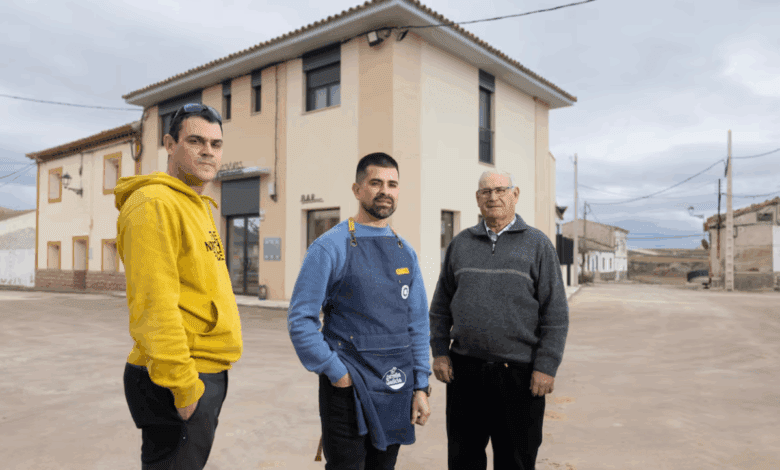
In Aragón, where small villages have been losing residents for years, an unexpected decision by local authorities has led to significant changes. In the village of Almochuel, home to just 22 people, the opening of a bar and shop became more than just news—it was a turning point that changed daily life. Thanks to this initiative, the village expects population growth—for the first time in years, a second child will be born here.
A family from Argentina, Darío Ferreira and Florencia Goggiano, moved to Almochuel after winning a competition to manage the new bar. They were given free housing and a position as municipal employees. Since the bar’s opening in September, village life has noticeably picked up: now locals can not only have a coffee or beer, but also buy groceries, socialize, and discuss current events. For residents, the bar has become more than a leisure spot—it’s a true community hub.
Social impact
The problem of village depopulation is especially acute in Aragón: over half of the region’s population is concentrated in Zaragoza, while most municipalities have fewer than 500 inhabitants. The lack of basic services—transport, schools, medical facilities—has long been the norm. Yet few realize that the disappearance of bars also unravels the social fabric. Where there is no bar, people lose not just a meeting place but a sense of community.
In 2023, nearly a quarter of villages in Aragón were left without bars, and in half the settlements, there is only one such establishment left. For many residents, it is not just a place to grab a snack, but the only opportunity to meet neighbors, catch up on local news, and feel part of the community. Experts note that if a village bar shuts down, the place quickly turns into a ‘ghost village.’
Multiformat and support
In recent years, the region has seen a rise in ‘multiservice’ bars, which combine the functions of a shop, post office, and library. The authorities of Aragón and local municipalities support these projects financially, covering losses and helping with utility costs. In the village of Vinaceite, the bar operates thanks to municipal support: people come here not only for drinks, but also for books and social interaction.
Often, such establishments are run by newcomers—immigrants from Latin America who see this as a chance for a new start. In Vinaceite, the bar is run by a family from Colombia, and in Valcarca, a Cuban woman manages thanks to the popularity of a local sandwich, providing for herself and her daughter. Despite the challenges, these venues become a cornerstone for the entire village.
Problems and challenges
However, it’s not always possible to find someone willing to take over running the bar. In some villages, such as Jatiel, the establishment remains closed, forcing local residents to travel to neighboring towns just to have a coffee or socialize. The absence of a bar intensifies the sense of isolation, especially among the elderly, for whom such places are often the only chance not to be alone.
Nevertheless, even under these circumstances, residents remain optimistic. Many point out that despite the challenges, life in small villages has its perks: peace, nature, and an escape from city bustle. Still, without gathering spots like bars, it becomes increasingly difficult to keep people in these rural communities.
Context and trends
In recent years, small towns across Spain have been looking for creative ways to stay vibrant and attract new residents. Opening bars with additional functions has become one of the most effective solutions. In some regions, these venues receive support not only from local authorities but also from regional governments and private initiatives. As a result, new jobs are created, local economies are revitalized, and most importantly, the community spirit is preserved. Similar projects have already proven effective in Castilla y León, Galicia, and the north of the country, where supporting bars has helped halt population decline and even attract young professionals.