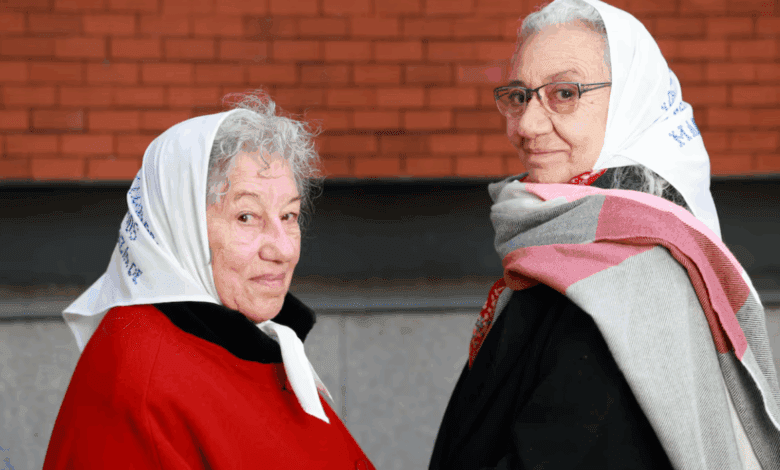
In the very heart of Madrid, a scene unfolded that no eyewitness will ever forget: two elderly women in white headscarves, symbols of pain and hope, accepted an award that has become a sign of justice for many. Their names are Sara Mrad and Carmen Arias. Behind them lie decades of struggle, lost loved ones, and thousands of stories still awaiting resolution. These women are living witnesses to the darkest chapter in Argentine history, when disappearances became commonplace and the search for truth turned into a lifelong mission.
Their appearance on stage sparked a wave of emotion: tears, applause, tense gazes. The white scarf, once just an ordinary baby diaper, has become a symbol of resistance and remembrance. Behind each scarf is a fate that cannot be forgotten. Sara and Carmen are more than just representatives of the movement; they are its very heart. Their loved ones vanished in 1977, and ever since, they have never stopped searching, despite threats, pressure, and the indifference of the authorities.
Lost Names
In Argentina, according to the association’s estimates, hundreds of children were torn from their families during the years of the dictatorship. Some ended up in the hands of the military, others in shelters where their past was erased. Even now, about 300 people are living without knowing who they truly are. For the mothers and grandmothers of Plaza de Mayo, these are not just statistics—they are a daily pain and the reason never to give up.
In Madrid, their struggle found a new response. The award, given in memory of the murdered lawyers, became not only a recognition of their achievements but also a reminder: the fight for justice knows no borders. Spaniards, who have endured their own tragedies, saw in these women a reflection of their fears and hopes. For Sara Mrad, it symbolized solidarity between peoples who do not forget their wounds.
Voices from the past
Leonardo Fossati, a man with an unusual story, was also present in the hall. He is one of those who, thanks to the association’s efforts, managed to reclaim his name and past. His story is like a shard of a broken mirror: years of doubt, strange feelings, a lack of resemblance to his adoptive family. Only a blood test and a database helped him uncover the truth: his parents had been abducted when his mother was seven months pregnant.
Today, Fossati is an active member of the movement, one of those who continue the grandmothers’ work. He does not hide it: in Argentina, voices justifying the crimes of the past are being heard again. For him, support from abroad is not just a gesture but a vital lifeline at a time when the state turns away from the truth.
New threats
Paula Sansone, another representative of the generation that grew up in the shadow of the tragedy, speaks about new challenges. Her parents were kidnapped when she was very young, but she was lucky—her family was not separated. Now she helps others search for their roots, yet faces unexpected resistance. The authorities have not only withdrawn their support but are openly hostile: online harassment campaigns flare up, and former victims are labeled as terrorists.
The association is forced to seek new sources of funding to continue its work. Donations are being collected through the website, but it’s not enough. Paula admits: when the state offered help, it was possible to recover more names. Now they have to fight not only oblivion but also active opposition.
Passing the torch
Despite their age and fatigue, Sara Mrad and Carmen Arias have no intention of giving up. They are convinced that only by preparing a new generation can the memory be preserved and the tragedy prevented from repeating. Their voices carry concern: the current government in Argentina worries them more than in all previous years. They do not trust a single promise and urge young people to stay vigilant.
For these women, the fight has become a way of life. Their story is not just about the past, but also about a future where truth and justice still remain uncertain. Their white scarves are a reminder that even decades later, the wounds have not healed, and memory awaits new heroes.