Political shifts have taken place in Manresa (Barcelona), potentially impacting the balance of power in the region. The Junts party has unexpectedly recruited former Front Nacional de Catalunya (FNC) candidate Sergi Perramon, a prominent figure in previous local elections. This move surprised many, especially since Aliança Catalana had previously counted on Perramon to strengthen its standing in the capital of Bages. Now, Junts hopes this defection will enhance its prospects for the upcoming 2027 municipal elections.
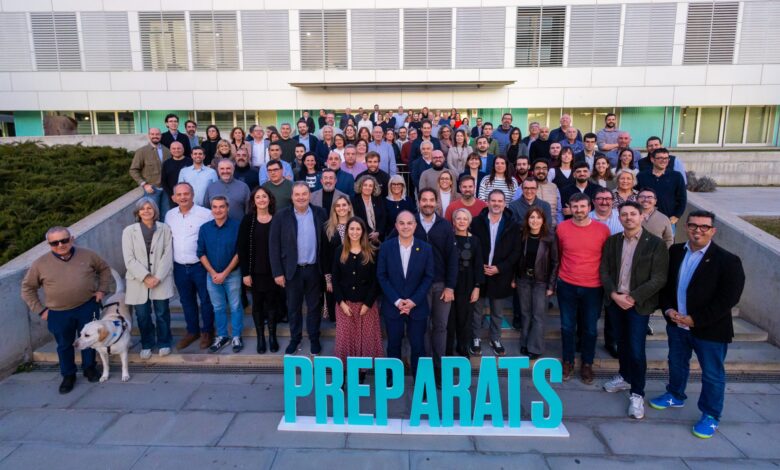
According to El Pais, as election preparations intensify, Aliança Catalana held its third candidate training school in Manresa, banking on the growing public support predicted by polls. However, the news of Perramon’s move to Junts came as an unpleasant surprise for the ultranationalists. In 2023, Perramon ran for office with the FNC and secured two seats on the city council, afterwards distancing himself from the party and launching his own platform, Avenç Nacionalista. Now, Junts and Avenç are joining forces to counter the rising influence of Aliança Catalana.
Balance of power shifts
In the new Junts list for Manresa, led by Ramon Bacardit, Perramon will hold a prominent position. His political agenda has consistently emphasized security and the control of resident registration—key concerns for many Junts members and crucial points in their confrontation with Aliança Catalana. The latter bases its campaign on hardline rhetoric over migration issues, sparking concern among some local politicians.
Perramon’s switch to Junts is not the only case where parties seek to strengthen their ranks by recruiting former representatives of their rivals or independent candidates. Aliança Catalana has also aimed to attract well-known local politicians to boost its standing. In 2023, the party received 2,812 votes (9.4%) in Manresa, but this was not enough to enter the city council. Nevertheless, the growing popularity of Aliança Catalana in central Catalonia is raising concerns within Junts, who fear losing part of their influence.
History of rivalry
Front Nacional de Catalunya, under whose banner Perramon ran last year, previously served as the launching pad for Sílvia Orriols, the current leader of Aliança Catalana. In 2019, she was first elected to the Ripoll (Girona) municipal council representing FNC, but soon left the party and founded her own movement. In 2023, Aliança Catalana achieved significant success, winning the majority of votes and securing the mayor’s office for Orriols.
Currently, Manresa’s mayor is Marc Aloy from Esquerra Republicana, who holds seven seats, while Junts secured six seats in 2023. Nationalists fear that in the next election Aliança Catalana could take away some of their seats and increase its influence in the municipality. According to a Centre d’Estudis d’Opinió (CEO) poll from November last year, Junts and Aliança Catalana would receive an equal number of parliament seats if elections were held now.
Context and trends
The situation in Manresa reflects a broader trend in Catalan politics, where parties are actively competing for voters’ support using unexpected personnel decisions and new alliances. Party switches, the creation of new platforms, and the formation of coalitions are becoming more frequent, especially amid the growing popularity of radical movements. In recent years, similar events have taken place in Catalonia: for example, in Girona and other cities, independent candidates and former members of various parties have joined forces to run in elections, resulting in surprising outcomes and reshaping the region’s political landscape.
Overall, the struggle for influence in Catalonia’s municipalities is becoming increasingly intense. Parties are aiming not only to maintain their positions but also to attract new supporters through high-profile defections and alliances. Events such as Perramon’s move to Junts could play a decisive role in the outcome of future elections and the political development of the region.