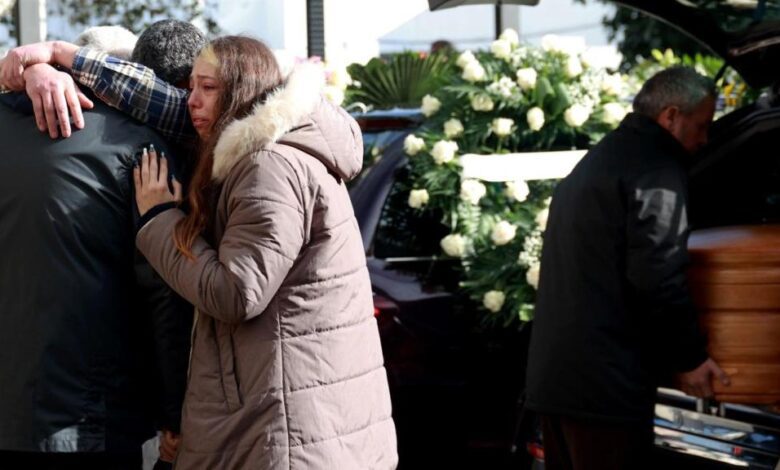
A new wave of debate is unfolding in Huelva after it emerged that the memorial mass for the victims of the Adamuz train disaster has been moved. For many people in Andalusia and across the country, this event is both a moment of mourning and a time to reflect on how the authorities respond to tragedies of this scale. The decision to forego the traditional venue—the Cathedral—in favor of a sports complex has drawn mixed reactions from victims’ families and the wider public.
Organizers explain that the cathedral simply cannot accommodate everyone who wishes to pay their respects. However, behind this formal explanation lies a much more complex situation. Authorities were met with an unexpectedly firm refusal from many families to take part in official events, along with criticism directed at organizers and government representatives. As a result, in order to avoid restrictions on attendance and prevent further conflict, the ceremony was moved to the spacious Palacio de Deportes ‘Carolina Marín’.
Families’ Response
The families of the victims are openly expressing their dissatisfaction. Many believe that the state has failed to fulfill its obligations to the victims and their loved ones. Some relatives have stated directly that they do not intend to take part in official ceremonies, citing the authorities’ actions as insufficient or even holding them responsible for what happened. In private conversations, accusations are made against the organizers, along with calls for a more honest and transparent dialogue.
Authorities, in turn, are trying to defuse tensions by offering additional support measures and promising that the ceremony will be conducted with the utmost respect for the memory of the victims. However, the tension remains: many residents of Huelva and other cities in the region are discussing on social media why such a sharp reaction has emerged now and what is really happening behind the scenes of the mourning events organization.
Ceremony organization
The mass is scheduled for Thursday, January 29, at 6:00 p.m. Monsignor Santiago Gómez Sierra is expected to lead the service, with participation from representatives of the episcopate and local clergy. A special place on the altar will feature the image of the Virgen de la Cinta, the city’s patroness, as well as the cross that was previously used during Pope John Paul II’s visit to Huelva in 1993.
Organizers emphasize that this evening will be dedicated not only to the memory of the victims, but also to those involved in the rescue operations. Firefighters, medical personnel, police, and volunteers will receive special words of gratitude for their dedication and professionalism. For many local residents, this is an important gesture that highlights the significance of collective efforts during the most difficult times.
Political subtext
The government’s decision to postpone the state mourning ceremony, originally planned for January 31, also came as a surprise. The reason is the widespread refusal of victims’ families to participate in the official commemoration. According to local authorities, most relatives stated they were unable or unwilling to attend the ceremony, despite invitations and promises of personal attendance from Prime Minister Pedro Sánchez, the head of the autonomous community Juan Manuel Moreno, and King Felipe VI.
Behind the scenes, there is speculation that such a strong reaction from the families may stem from distrust in official institutions and disappointment with the government’s actions after the tragedy. Some relatives openly accuse the authorities of a lack of sufficient response and even of being involved in the incident. This adds another layer of tension to an already difficult situation and raises questions about how Spain commemorates the victims of major disasters.
Public response
On social media and city forums, residents of Huelva are actively discussing not only the tragedy itself but also the organization of the mourning events. Opinions are divided: some support the decision to postpone the mass, considering it logical and necessary, while others see it as a sign of disrespect for tradition and an attempt to hide real problems. Comments call for greater transparency and honesty from the authorities, as well as demands to reconsider the approach to organizing such events in the future.
The question remains open: will the authorities and organizers be able to regain the trust of families and society, or will this story become yet another example of how a tragedy can expose deep divisions within Spanish society?