The events surrounding the tragedy in the Valencian Community in the autumn of 2024 continue to spark heated debate among local residents. The decisions made on the eve of the disaster proved to be crucial in understanding why such significant loss of life became possible. The issue of the timeliness and effectiveness of public warnings returned to the spotlight after new testimony from high-ranking officials.
The investigation revealed that Valencia authorities discussed the possibility of sending out mass warning messages a day before the devastating gota fría, which claimed 230 lives. However, despite these discussions, the mass alert system was activated only in the evening, when it was already too late to save most of the victims. This fact has become a focal point for investigators and has triggered a wave of public discontent.
Internal discussions
In December 2025, the former chief of staff to ex-Justice and Home Affairs Councillor Salomé Pradas testified in court, providing details of how the government discussed potential measures to warn the population. According to her, talks about the need for mass notification had been underway a full day before the tragedy, with particular attention paid to informing municipalities and their leaders.
Silvia Soria admitted that she was not personally familiar with the Es Alert system, which was later used to send notifications to mobile phones. She first heard about it only on the day of the disaster, when one of the technical specialists explained to her that the name was related to Spain. This moment was a surprise to her, as previous discussions had taken place without mention of specific technical solutions.
Coordination and actions
On the same day the disaster struck the region, former president Carlos Mazón did not cancel his official engagements and spent several hours at a restaurant despite the worsening situation. Meanwhile, possible scenarios and response measures were being discussed at the Emergency Coordination Center (Cecopi). According to Soria, by the evening of October 28, emergency service leaders were already reporting the need for a special warning and sharing information about negotiations with municipalities.
There was particular concern about the Forata dam in Yátova, where there was a risk of a breach that could lead to catastrophic consequences. According to specialists, if the dam were destroyed, the number of victims could reach 8,000 people. These concerns were discussed within a small group, but did not lead to an immediate alert for all residents.
Discrepancies in testimonies
During the trial, it became clear that the key participants had markedly different perspectives on the events. Soria described Pradas’s conduct during the Cecopi meetings as active and engaged: she coordinated the work, demanded up-to-date information, and showed personal interest in what was happening. However, Pradas herself, speaking in court, tried to distance herself from responsibility, shifting it onto the technical specialists.
A significant detail was that during Cecopi’s discussions on October 29, the issue of the barranco del Poyo—a riverbed that caused the flooding and led to the deaths of dozens of residents in the municipalities of Catarroja and Paiporta—was not raised. Soria noted that if she had heard the location mentioned, she would have immediately been alert, since her family and business are connected to that area.
Consequences and questions
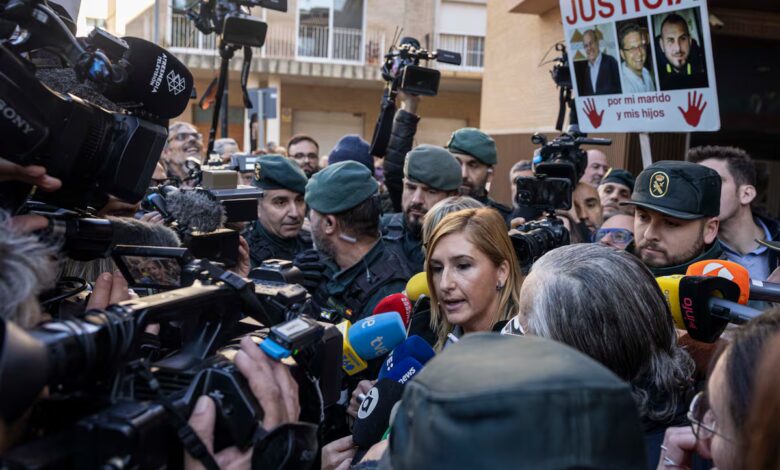
The investigation is ongoing, and new details emerging in court are fueling public interest in the authorities’ actions during the critical moment. Why was the mass alert system not activated in time, and who is responsible for the delay? These questions remain unanswered. For many Valencia residents, the 2024 tragedy was not just a personal loss but also a reason to reconsider the reliability of state protection mechanisms.
While the investigation searches for those responsible, residents of the affected areas continue to demand transparency and justice. Reflecting on those days, many wonder: could such a large-scale disaster have been avoided if decisions had been made more quickly and effectively?