The sudden resignation of the Indra president resulted from sharp tensions between state interests and private ambitions in Spain’s strategic defense sector. The attempt to merge Indra with the family firm Escribano Mechanical & Engineering raised not only concerns over a conflict of interest, but also triggered a wave of distrust among key market players. The consequences are already being felt: Indra risks losing major government contracts, while competitors are strengthening their positions.
Sources of pressure
The crisis began when Ángel Escribano proposed integrating EM&E into Indra, a move that could have made his family the largest shareholder. This step alarmed not only the board of directors but also SEPI—the government body that controls nearly a third of shares. Concerns intensified after it became clear that, if the deal went forward, the government could face lawsuits from minority shareholders. As reported by La Razón, this was when the economic team at Moncloa and the Ministry of Defense began to put targeted pressure on Escribano.
The decisive factor was the actions of Manuel de la Rocha, head of Moncloa’s economic office, and Margarita Robles, Minister of Defense. They insisted on a change in leadership to remove any risks to state interests. SEPI’s intervention, which culminated in an official letter demanding the president’s removal, became the final straw. As a result, Escribano was forced to abandon the merger plan and step down to prevent further escalation of the conflict.
Role of competitors
While Indra was grappling with internal problems, Santa Bárbara Sistemas, a subsidiary of General Dynamics, seized the opportunity. The company initiated legal proceedings, challenging the allocation of multibillion-euro military equipment contracts. Santa Bárbara claimed that Indra and EM&E had received orders without open tenders, undermining fair competition. The case also drew in former government cabinet chief Iván Redondo, who now advises Santa Bárbara, increasing pressure on Indra.
Santa Bárbara’s lawsuits concern contracts worth over 6 billion euros linked to weapons programs. The conflict further escalated with accusations of industrial espionage: a former Santa Bárbara employee, connected to Indra’s leadership, was implicated in leaking classified documents on the Castor and 8×8 Dragón projects. This created unprecedented tension in the sector, where every misstep can cost a company its reputation and billion-euro deals.
Internal reshuffles
Amid the conflict, Indra suffered staff losses: Beatriz Gómez, previously responsible for operations, moved to Indra, a move seen as a challenge by Santa Bárbara. This only heightened competition for government contracts and intensified the struggle for influence in the defense sector. Against this backdrop, Indra tried to strengthen its position in the European market, competing with such giants as Leonardo, Rheinmetall and BAE Systems. However, plans to merge with EM&E were put on hold after Escribano left.
Despite the pressure, Escribano still had influential supporters among shareholders. Joseph Oughourlian, the head of Prisa, publicly backed him, and Escribano himself recently received an award from Cinco Días. Nevertheless, this was not enough to keep his position. Now José Vicente de los Mozos is expected to temporarily lead Indra, with Ángel Simón and Miguel Sebastián named among the possible successors.
Context and consequences
The situation around Indra resembles other recent crises in Spanish companies, where the state has actively intervened in corporate governance. Similar conflicts have already led to management changes and shifts in influence in strategic sectors. Russpain.com’s analysis suggests that such developments may become the new normal for major Spanish companies, where government and business interests increasingly clash.
Internal political disagreements and the battle for control over key assets are becoming increasingly visible. This is also evident in other areas: for instance, the recent crisis in ERC, where internal disputes and failed coalition talks led to the party losing positions, is examined in detail in the article on the consequences of the Barcelona primaries for ERC unity.
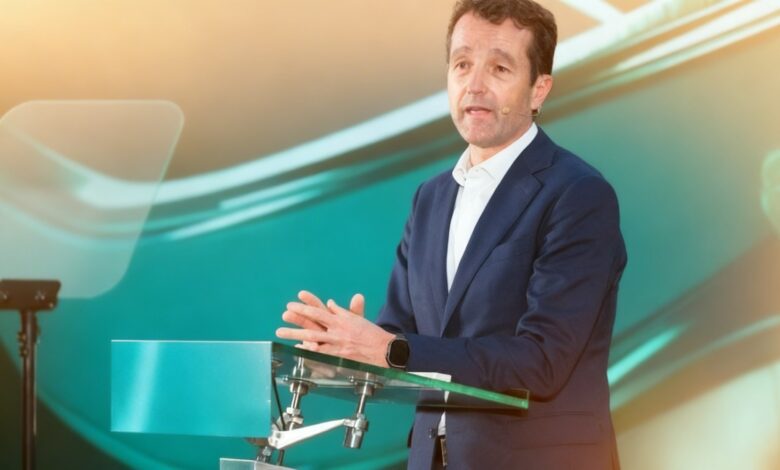
Ángel Escribano Ruiz is a figure whose career is closely linked to the development of the family business and Spain’s defense industry. His journey began at a small family-owned company that eventually grew into one of the sector’s leading players. In recent years, Escribano has played an active role in Indra’s strategic initiatives, working to strengthen the company’s position in both domestic and international markets. Similar stories have already occurred in Spanish business: a change in leadership following attempted major mergers or government pressure is not uncommon, and each such case leaves a significant mark on the industry.