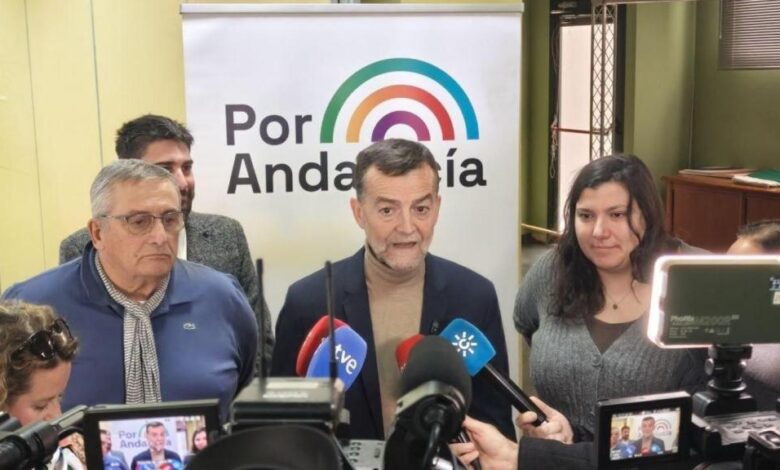
A political shift is brewing in Andalusia—one that could alter the region’s balance of power. Antonio Maíllo, the Por Andalucía candidate, has openly declared his intention to steer his party on an independent course, rejecting any attempts to restore the PSOE to power. For locals, this isn’t just more campaign rhetoric; the future of public services, currently at the heart of a fierce inter-party struggle, is at stake.
Maíllo insists that Por Andalucía will not serve as a conduit for the socialists’ return to regional leadership. His strategy is to build an independent political project, free from old alliances and not beholden to the interests of other leftist forces. While open to collaboration with Podemos, the party refuses to sacrifice its own platform for the sake of alliances. Past years, when coalition talks dragged on until the last minute, have taught Maíllo a lesson: now Por Andalucía charts its own path, and if others wish to join, they’ll have to do so on the move.
Appealing to the Disillusioned
Maíllo’s key mission is to bring back to the polls those who have lost faith in politics and stopped voting in regional elections. He believes this segment of society has the power to change the outcome of the campaign. It’s not just about attracting new supporters, but also about convincing those who typically vote in national elections—but ignore local ones—to get involved. Maíllo expects his party will appeal to both left-wing and moderate voters who are weary of old political formulas.
Unlike other left-wing groups, Por Andalucía focuses on defending public services—healthcare, education, and support systems for dependent citizens. Maíllo is confident that these are the main issues concerning most residents of the region, and that they form the foundation for an alternative to the current government. According to him, the incumbent president of the autonomous community, Juanma Moreno, should not remain for a third term; otherwise, the healthcare system simply won’t withstand it.
Keeping a distance from PSOE
Maíllo makes no secret of it: cooperation with PSOE is only possible after the elections and only if a coalition government needs to be formed. Until then, there will be no joint actions or pre-election agreements. This approach is an attempt to emphasize Por Andalucía’s independence and avoid any association with the past mistakes of the socialists, who governed the region for a long time.
Within the party, they are convinced: only a strong showing in the elections will enable them to set the terms in future negotiations. Maíllo openly states that his goal is to win the maximum number of votes in order to dictate terms to even larger political players if necessary. In this context, Por Andalucía does not intend to make concessions for short-term gains.
Fighting for the agenda
Another important aspect is Maíllo’s desire to bring Andalusia to the center of the national political dialogue. In his view, the region is too often overshadowed by Madrid and Catalonia, and its problems are ignored at the national level. Maíllo intends to change this by using the upcoming elections as a platform to promote Andalusia’s interests.
The intraparty strategy is built not only on opposing the ruling Partido Popular, but also on countering the rising influence of far-right forces. Maíllo emphasizes that the goal is to prevent extreme positions from becoming dominant in the region. In this context, the defense of public services becomes not just a campaign slogan, but a matter of survival for many residents.
New rules of the game
Maíllo keeps insisting: victory is possible if old patterns are abandoned and independence is prioritized. His team is confident that only then can voters’ trust be regained and Andalusia’s political landscape transformed. Ahead lies a tough campaign, where not only power, but also the future of key aspects of regional life is at stake.
With traditional alliances no longer working and the electorate tired of old promises, Por Andalucía is betting on renewal and open competition. Maíllo makes no secret of his aim: not just to participate in the elections, but to have a real impact on the region’s politics. The question is whether those disillusioned with former leaders will support his strategy.