A conflict is brewing within the Partido Popular (PP) that could have serious consequences for Spain’s entire political landscape. Alberto Núñez Feijóo, the party leader, finds himself at the heart of a complicated situation involving Carlos Mazón, president of the Valencian Community. Over the past year, Feijóo has received repeated warnings from fellow party members urging him to intervene and resolve the crisis before it leads to further losses.
The situation surrounding Mazón has escalated far beyond the regional level. It’s now a party-wide issue that affects not only Valencia but also the PP as a whole. Many inside the party fear that delaying a solution could cost the PP not just control of this region, but also hurt its prospects in the next national elections. Growing frustration centers on Feijóo’s reluctance to take decisive action—hesitation some believe is rooted in concerns about destabilizing the party’s standing and losing support in one of Spain’s key regions.
Delays and their consequences
Why Feijóo has yet to demand Mazón’s resignation is a topic of debate both inside and outside the party. After the tragedy caused by the flooding (dana) and the subsequent scandals, many expected party leadership to react swiftly. Instead, Feijóo opted for a wait-and-see approach, worried that acting too quickly might cost the PP control over the region. Some party officials now argue that this hesitation was a mistake that has only made things worse.
Recalling the experience of past years, some compare the current crisis to the case of Francisco Camps, who was once forced to resign after judicial proceedings. Back then, the party managed to save face, but the current situation appears much more complicated. Despite the pressure, Mazón is in no hurry to step down, while Feijóo hesitates to take tough action, fearing internal divisions.
Impact on the party’s future
The delay in making a decision about Mazón has already led to noticeable losses for the PP. After last year’s elections, a swift alliance was formed with the far-right Vox party in Valencia, marking the beginning of similar agreements in other regions. This gave opponents ammunition for criticism and contributed to the party’s failure in the national elections. Now, many within PP fear repeating the same mistakes: if Mazón stays, the party risks losing voters’ trust; if he leaves, tough negotiations with Vox will be inevitable, potentially weakening the party even further.
Internal disagreements are becoming increasingly apparent. Some regional leaders are openly unhappy with the way Feijóo is handling the situation. Meanwhile, Mazón continues to strengthen his position, hoping to serve out his term and pass power to his successor. However, this scenario satisfies far from everyone, and tensions within the party are only growing.
Risks for Feijóo and the PP
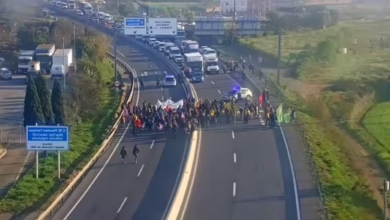
With Vox supporting Mazón and calls for the president’s resignation echoing through the streets of Valencia, Feijóo finds himself in an extremely difficult position. Any decision could lead to losing control over the region, or even spark an internal party crisis. The situation is further complicated by similar problems emerging in other regions—such as Extremadura and Aragón—where tensions between the PP and Vox are also on the rise.
Ultimately, delaying a decision on Mazón could cost not only Feijóo, but the entire party dearly. Internal disputes, uncertainty over the leader’s actions, and the growing influence of the far right are fueling an atmosphere of instability that could soon bring major changes to Spain’s political landscape.