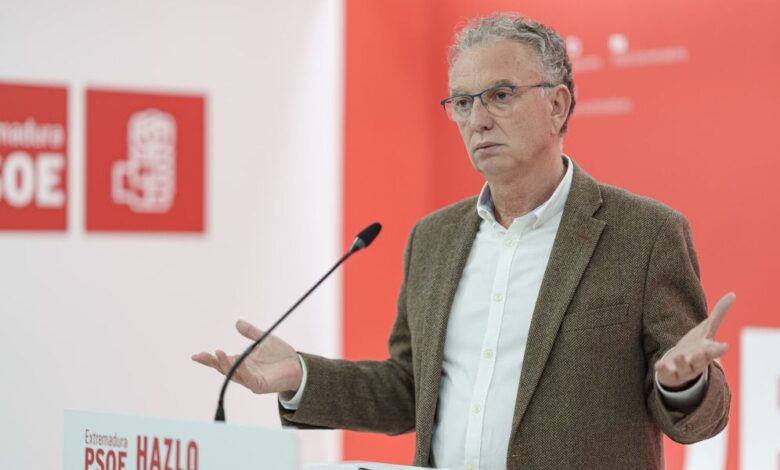
A scandal has erupted within the Extremadura branch of the Spanish Socialist Workers’ Party (PSOE) that few seasoned political observers could have predicted. The government’s delegate in the region, José Luis Quintana, has found himself at the center of a major controversy after a municipal party deputy accused him of systematic psychological harassment and threats. The allegations surfaced not behind closed doors, but publicly on social media, immediately sparking a wave of discussion among party members and journalists.
Quintana, who took over leadership of the interim regional management committee after the previous leader’s resignation, did not remain silent. On his X account (formerly Twitter), he flatly denied all allegations, stressing that he had never had a subordinate relationship with the colleague who made the harassment accusations. According to him, no bullying or persecution had occurred, and all such claims were lies and attempts at manipulation.
Allegations and Response
The story began when a municipal deputy representing the PSOE in one of Extremadura’s towns used the party’s internal channels to file an official complaint. In it, she claimed that Quintana had allegedly pressured and threatened her, and had even succeeded in having her dismissed from the party structure through the former secretary, Miguel Ángel Gallardo. Notably, Gallardo recently resigned after the party’s poor regional election results.
The party was immediately abuzz with talk: some backed their colleague, others sided with Quintana. Behind closed doors, there is speculation that such accusations may be linked to internal power struggles following the leadership change. However, neither side is officially willing to admit the existence of a factional conflict.
A Public Dispute
Quintana’s post on X served as a kind of challenge: not only did he reject the accusations, he also emphasized that he had never been the complainant’s supervisor. His post quickly spread through party chats and became a topic in local media. Many note that such a strong response is rare for Spanish politicians, who usually prefer to keep internal conflicts private.
However, the deputy did not limit herself to internal procedures. She continued to share her experiences on social media, describing how alleged pressure from the party leadership had affected her professional and personal life. Her posts speak of injustice, fear, and disappointment in party values.
Internal Mechanisms
PSOE has dedicated channels for handling such complaints, and the complainant made use of them. According to the regulations, these cases are reviewed by an ethics commission, which may issue recommendations for further action. No official decisions have been made yet, but the party is already discussing potential consequences for both sides.
Behind the scenes, debate continues: some believe these accusations are part of a power struggle following a change in leadership, while others are convinced that this is a real problem that shouldn’t be swept under the rug. In any case, the situation has already spilled beyond an internal dispute and become a matter of public interest.
Public reaction
The story quickly spread beyond party walls. On social media and in the streets of Extremadura, people are debating who is at fault. Some are demanding a thorough investigation, while others urge caution against jumping to conclusions. Either way, this scandal has become one of the most talked-about events in the region’s political life in recent months.
How this story will end remains unclear. But one thing is certain: the internal conflicts within PSOE have taken on a new public dimension, and now the entire country is watching closely.