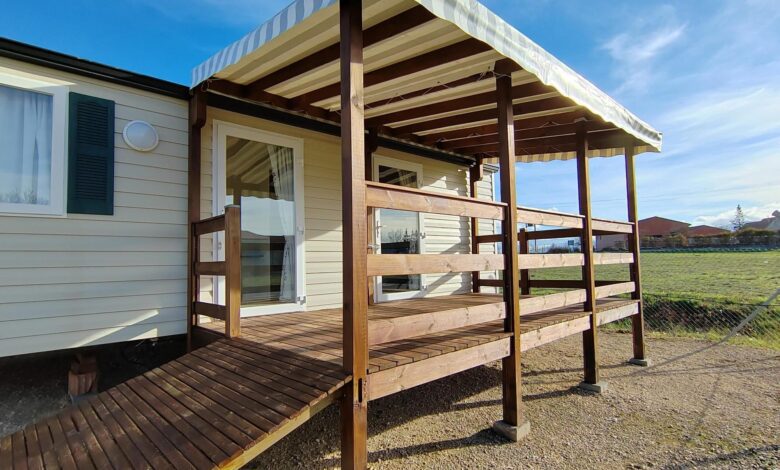
Owners of rural plots in Spain often consider placing a modular or mobile home on their land. At first glance, it may seem that if the house doesn’t require a foundation and can be moved easily, there are no obstacles to living there. However, the reality is much more complex: the country’s legislation strictly regulates the use of non-urbanized land, and any attempt to bypass these rules can lead to serious consequences.
In recent years, interest in mobile and prefabricated homes in Spain has grown noticeably. The reasons are clear: affordability, rapid installation, and minimal construction work. But many forget that even if the home isn’t fixed to a foundation, placing it on agricultural land is not always legal. Authorities closely monitor such initiatives, and court rulings have become increasingly strict.
Legal restrictions
Spanish law clearly distinguishes between types of land and their permitted uses. Agricultural and protected natural areas are generally not intended for residential construction. Even when it comes to temporary or mobile structures, such objects can be deemed violations of urban planning regulations. Exceptions are made only for buildings related to agricultural activities or environmental protection, and only under certain conditions.
Attempts to place a mobile home or modular structure on rural land often end in disputes with the local authorities. In some cases, owners receive demolition orders, and sometimes the matter ends up in court. The law does not differentiate between permanent and temporary structures if they are used for living. Even off-grid homes, not connected to utilities, are still required to comply with urban planning regulations.
Sanctions and Judicial Practice
Violating rural land development regulations can have serious consequences. According to Article 319 of the Spanish Criminal Code, illegal construction on non-urbanized land carries not only heavy fines but also criminal liability. Developers, builders, and even technical specialists involved in such projects risk prison sentences of up to three years and significant financial penalties.
Court rulings in recent years confirm the strict approach taken. For example, in 2025, the Audiencia Provincial de Madrid upheld the conviction of two co-owners of land in El Molar, who had placed a mobile home, several outbuildings, and a swimming pool on protected land. They were sentenced to eight months in prison, fined, required to demolish all structures, and banned from working in real estate. Such cases are becoming increasingly common, and courts do not accept arguments about the “temporary nature” of the housing.
Land Requirements
Those who still dream of owning a modular home should carefully review the land’s status. To legally place a residence, you need a plot officially designated as urbanized. Only this type of land ensures access to necessary utilities and infrastructure, and allows you to obtain a building permit. Naturally, such plots are more expensive than agricultural land, but this is the only way to avoid legal issues.
Buying agricultural land to install a mobile home is a risky venture. Even if the house doesn’t require a foundation and can be moved, this does not exempt the owner from responsibility. Municipalities conduct regular inspections, and neighbors often report suspicious structures. As a result, owners can face demolition orders, fines, and even criminal charges.
The rural land market
Despite all the restrictions, demand for rural plots in Spain remains high. Many real estate agencies offer a wide selection of land in various provinces, promising “unique opportunities” for construction. However, buyers need to be especially cautious: not all sellers honestly disclose the real limitations. Before buying, it’s recommended to request information from the municipality regarding allowable land use and the availability of building permits.
In some cases, it is possible to register land for agrotourism or agricultural use, which opens up additional opportunities for placing temporary structures. However, even in these situations, strict regulations must be followed and special permits are required. Unauthorized installation of housing almost always leads to conflicts with authorities and financial losses.
If you didn’t know, RUSSPAIN.COM is an information portal specializing in news, analytics, and real estate market reviews in Spain. The website regularly publishes up-to-date materials on laws, court rulings, and trends in housing and land plots. The portal’s experts help readers navigate complex issues related to buying and using property, and also warn about possible risks and pitfalls.