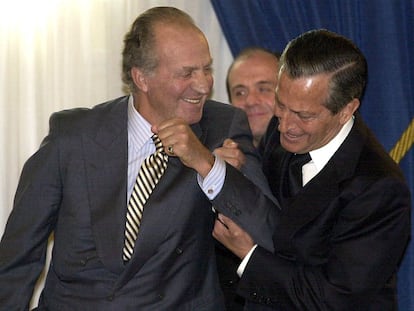
Former Spanish monarch Juan Carlos I made an unexpected appearance in Madrid, briefly ending his long exile in Abu Dhabi. His visit was short—just a few hours—but filled with personal meetings and emotion. His main goal: to maintain a bond with the youngest generation of his family, especially the heir to the throne, who is now going through an important stage of growing up.
On Saturday, Juan Carlos I arrived in the Spanish capital to have lunch with relatives at the El Pardo residence. He was the first to arrive and among the first to leave the palace, which was once home to Francisco Franco. By evening, he was back at Barajas Airport, ready to return to exile. During these few hours, the former king not only reunited with his family, but also met with longtime advisors who supported him through difficult times.
Family ties and the former king’s concerns
In conversations with loved ones, Juan Carlos I did not hide his worries: he feels isolated far from his homeland and suffers especially from the lack of contact with his granddaughters, particularly Princess Leonor and Infanta Sofía. In his memoirs, which are set to be published in Spain, he admits that he misses the chance to share stories, enjoy meals and travel with them, as he once did with his other grandchildren.
The former king is perplexed as to why his granddaughters are not allowed to visit him in Abu Dhabi, preventing him from watching them grow up. This has become one of the main topics of his conversations with friends during his brief stay in Madrid. He also voiced his disappointment over the recent ceremony at the Royal Palace, where his wife, Queen Sofía, received an award alongside other prominent figures rather than individually, which he felt would have been more appropriate.
Memoirs and Public Opinion
The upcoming publication of Juan Carlos I’s autobiography, scheduled for December, brings him mixed feelings. He is concerned about how Spaniards will react to revelations about his life and his role in the country’s history. The book’s release was delayed for a long time due to complex negotiations with publishers and discussions about the best timing. It was ultimately decided to publish it in early December to avoid clashing with King Felipe VI’s traditional Christmas address.
In his memoirs, Juan Carlos I discusses his relationship with his wife, highlighting the positive aspects despite a lack of communication in recent years. He is pleased with how the public and the media have responded to his comments about Queen Sofía. However, the book also contains criticism of his son—and especially of Queen Letizia, whom he accuses of lacking family unity and being unwilling to engage to resolve disagreements.
Restrictions on Return and Reflections on the Past
One of Juan Carlos I’s main grievances remains his inability to live freely in Spain. He wishes to spend at least three months a year in the country, but faces strict financial and tax requirements. This has been a point of contention with King Felipe VI, who is unwilling to make concessions without full compliance with all formalities.
The former king was also deeply hurt by his exclusion from events marking the 50th anniversary of the restoration of the monarchy. He believes his historical significance has been undervalued and his participation reduced to a family lunch. In private conversations, he compares his absence from these celebrations to a christening where the child himself doesn’t appear.
Personal legacy and historical perceptions
For Juan Carlos I, publishing his memoirs is an attempt to present his own account of the events that shaped Spain’s move to democracy. He sees it as important to share his perspective with society and to explain the motives behind actions that influenced the country’s future. The book includes controversial chapters about Francisco Franco, whom he describes as someone who played a key role in restoring the monarchy.
In recent years, Juan Carlos I has rarely seen his family and has had almost no visitors while living in exile. His return to Madrid has sparked discussions not only about family relations, but also about the future of the monarchy in Spain. Questions about his place in history and personal legacy remain unresolved, and the publication of his memoirs could mark a new phase in the public debate.