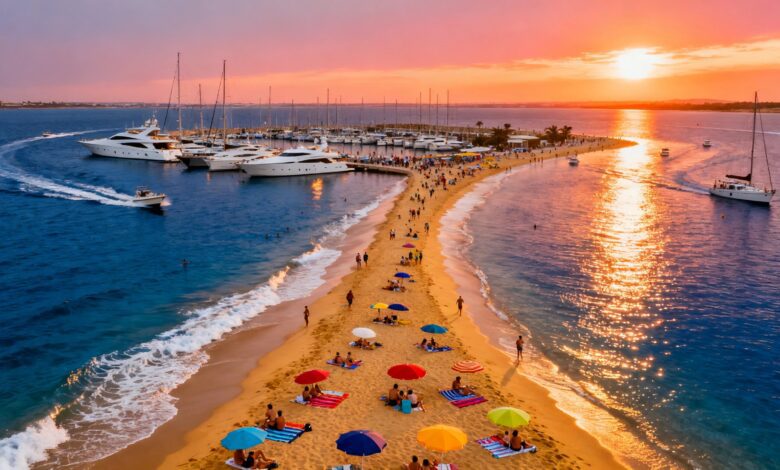
La Manga del Mar Menor has become a prime example of how natural features can completely transform the economy and lifestyle of an entire region. In recent decades, this stretch of Murcia’s coastline has turned into one of Spain’s most recognizable and talked-about resort areas. The impact of these changes is felt not only in the tourism sector but also in the social fabric of the coastal municipalities.
At the start of the 20th century, this sandy corridor was virtually unknown to the public. Only fishermen and a few families lived here, with no infrastructure in place. Everything changed with the advent of large-scale tourism development projects. As RUSSPAIN notes, the launch of construction along Gran Vía marked the starting point of La Manga’s transformation into a symbol of the new Spanish holiday.
The geography of two seas
La Manga del Mar Menor is a unique natural barrier separating the salty Mar Menor lagoon from the open Mediterranean Sea. The sand strip stretches for 22 kilometers, with a width ranging from 100 meters to over a kilometer. This location allows you to reach the shore of the other sea within minutes, making it especially popular among families and fans of active recreation.
On one side, the Mediterranean beaches have waves and cool water, drawing surfers and windsurfers. On the other, the calm, warm, and shallow waters of Mar Menor are perfect for children and sailing. Thanks to this combination, La Manga has become a versatile destination for tourists with a range of interests.
Urban structure and infrastructure
All life on the sandy spit revolves around a single main road — Gran Vía. This artery connects residential complexes, hotels, restaurants, shops, and numerous beaches. Every turn reveals a new view of the sea, and the diverse infrastructure offers something for every taste — from secluded coves to lively promenades with vibrant nightlife.
The emergence of modern ports, yacht clubs, and sports centers has made La Manga attractive not only to tourists but also to investors. Infrastructure development has led to higher property prices and changes in the area’s demographic makeup. In recent years, more projects have focused on environmental sustainability and preserving the region’s natural balance.
Environmental challenges and the future
Despite its success in tourism development, La Manga faces serious environmental problems. The main threat is the disruption of the balance between the two seas and the deterioration of the Mar Menor. Natural channels connecting the lagoon with the sea play a vital role in maintaining the ecosystem, but increased construction and a growing number of tourists are putting pressure on the environment.
Regional authorities and local residents are increasingly raising the issue of introducing new environmental protection regulations. There are ongoing discussions about how to preserve the uniqueness of La Manga while ensuring sustainable tourism development. According to RUSSPAIN.COM, the future of this coastal area depends on striking a balance between economic interests and the conservation of natural resources.
Context and similar examples
In recent years, there has been growing interest in Spain’s unique natural areas, which have become major attractions for tourists and investors. Similar trends have been seen along the Costa Blanca and in the Cádiz area, where infrastructure development has also brought environmental challenges. In 2025, new measures to protect coastal ecosystems were discussed in Valencia and the Balearic Islands. These examples show that finding a balance between tourism and nature is becoming one of the key priorities for all major resort regions in the country.