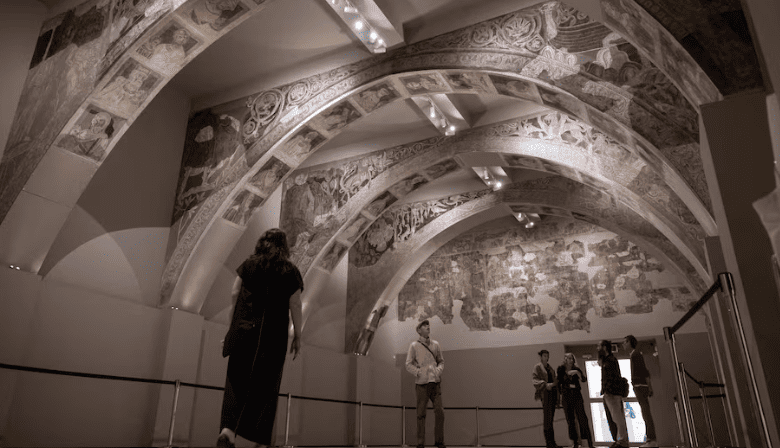
In May last year, Spain’s Supreme Court put an end to a long-standing dispute: the frescoes that had adorned the walls of the Santa María de Sijena monastery since the 13th century and were taken to Barcelona in 1936 must return home. However, despite the court’s final decision, the handover of these unique paintings has stalled. For six months, the parties have been unable to agree on the details, and the works of art remain in the halls of the National Art Museum of Catalonia (MNAC).
The legal battle between the Aragon government, the municipality of Villanueva de Sijena, and the Catalan authorities lasted more than a decade. Now, with the court’s decision in place, a judge in Huesca must navigate the intricacies of restitution, sifting through a mountain of documents and expert opinions. The museum’s latest batch of materials alone amounted to 2.5 gigabytes—and that’s far from the limit.
Technical challenges
The main reason for the delay is the fragile state of the frescoes. The Catalan museum insists that any movement could cause irreparable damage. MNAC staff have repeatedly stated that they do not have the necessary technology for safe removal and transportation. Some experts share these concerns, noting more than 700 critical points on the surface: cracks, bulges, and areas with weakened structure.
The authorities in Aragón, on the other hand, are confident that the frescoes can be returned without risk. They propose completing the process in seven months, while the museum insists that at least a year and a half is needed just for preparations. The Sijena municipality has yet to present its own plan, but its representatives urge caution and a thorough approach at every stage to avoid damaging the artworks.
Unanswered questions
The judge has already indicated her intention to see the ruling enforced. However, neither side has proposed a concrete plan for transportation. Even removing the frescoes from their stretchers is an extremely complex task: more than 5,000 nails would have to be cut, and vibrations could worsen existing damage.
The frescoes cover an area of 132 square meters and were divided into 72 sections during the 1936 restoration. Each fragment requires a tailored approach and extra protection. In addition, the current stretchers are unsuitable for installation in the monastery’s historic hall, which means further modifications will be needed.
Expert assessments
The museum and the government of Aragón are awaiting assessments from specialists at the Instituto del Patrimonio Cultural de España (IPCE), which has previously opposed relocating other major artworks. However, the judge has decided not to request another expert opinion, citing the documents already on file.
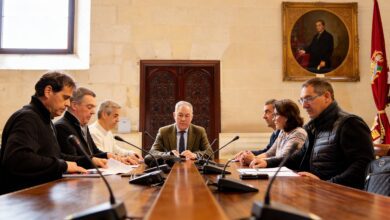
Another meeting of the museum’s board of trustees is scheduled for December, where the fate of the frescoes will once again take center stage. Representatives from the Ministry of Culture and the Barcelona City Hall have so far remained silent, while museum staff continue to insist on a thorough risk assessment.
The Future of the Frescoes
The Aragon government claims that the conditions for storing the murals in the monastery meet all requirements, with the necessary temperature and humidity maintained. However, the question of when and how exactly the frescoes will return home remains unresolved. It’s possible they might be temporarily placed in a reserve facility after transportation, before being installed in the historical hall.
So far, neither side is ready to announce exact dates. Everyone is waiting for further expert assessments and finalizing technical details. A court decision has been made, but its implementation will require both time and caution.
Incidentally, the monastery of Santa María de Sijena is one of the most important examples of medieval architecture in Aragón. Its frescoes are considered a unique example of Romanesque art in Spain. The Museu Nacional d’Art de Catalunya (MNAC) houses the largest collection of Catalan and Spanish art, where the frescoes had been kept for nearly 90 years. The issue of returning the murals has become one of the most heated cultural disputes between Aragón and Catalonia in recent decades.